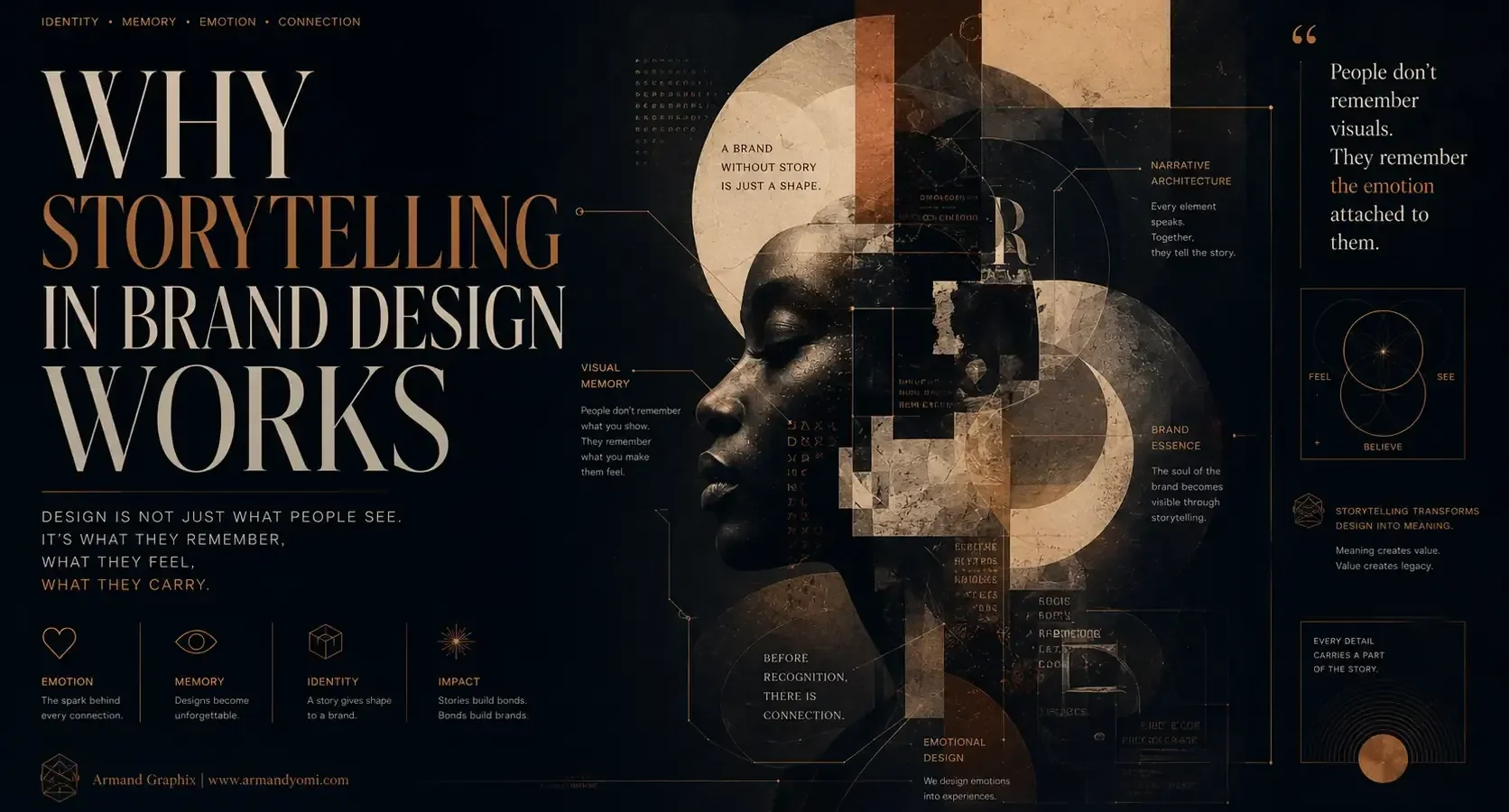
A polished logo can catch attention. A thoughtful color palette can signal quality. But neither explains why a brand matters. That is where storytelling in brand design changes the entire equation. It gives visual identity a point of view, a reason to exist, and a structure people can actually remember.
For founders, startups, and growing businesses, this matters more than most branding conversations admit. Many brands do not struggle because they lack good visuals. They struggle because their visuals say too little, or say different things in different places. The result is a brand that looks finished but feels hollow. Story fills that gap. It turns design from decoration into direction.
“People remember stories, not just logos.”
Discover how emotional storytelling transforms brand design into something audiences truly remember, trust, and connect with.
Build a Memorable Brand →What storytelling in brand design really means
Storytelling in brand design is not about inventing a dramatic origin story or writing poetic copy no one will use. It is the practice of translating a brand’s purpose, character, audience, and promise into visual decisions people can feel and understand.
That translation shows up everywhere. It lives in the shape of the logo, the tension or softness of the typography, the discipline of the layout, the way packaging reveals product value, and the emotional rhythm of a website. Good brand design does not simply look attractive. It communicates intent.
A strong story gives design a central thread. Without that thread, brands often collect trends. They choose colors because they are popular, typefaces because they look premium, and imagery because competitors are doing something similar. The identity may still look modern, but it lacks internal logic. Story creates that logic.
Why story gives design more commercial power
Design-led businesses already understand that perception affects growth. What is often underestimated is how much stronger perception becomes when it is tied to a clear narrative.
People rarely remember isolated design elements. They remember what those elements made them believe. A sharp minimalist identity might suggest precision. Warm editorial typography might suggest craftsmanship. A bold high-contrast system might suggest confidence and momentum. These are story signals, whether a brand names them or not.
That is why storytelling in brand design has practical value beyond aesthetics. It supports recognition, trust, and consistency. It helps a founder explain the brand to investors, helps a sales team present with confidence, and helps customers feel they understand the brand quickly. When the story is coherent, marketing becomes easier because the brand already knows what it stands for.
There is also a performance angle here. Brands with a clear narrative often create stronger websites, sharper campaigns, and more persuasive packaging because every touchpoint is aligned around the same message. Strategy that grows your brand starts with design that gives strategy something meaningful to amplify.
The story is not your biography
One of the most common mistakes in brand development is assuming the story begins and ends with the founder. Sometimes the founder’s journey is relevant. Often it is not the main thing the audience needs.
The more useful question is this: what transformation does the brand help create? For a product business, that might be confidence, simplicity, status, health, or convenience. For a service business, it might be clarity, momentum, credibility, or growth. Once that transformation is clear, design can express it with far more precision.
This is where many brands need restraint. Not every story needs to be loud, emotional, or deeply personal. Some categories respond better to calm authority. Others need warmth and relatability. A law firm, a beauty brand, and a food startup should not all tell stories with the same visual intensity. It depends on the audience, the offer, and the level of trust required before purchase.
How narrative shapes visual identity
A brand story becomes useful when it starts influencing choices. If the story says the brand is rooted in craftsmanship and detail, then the identity might lean into refined typography, deliberate spacing, tactile packaging cues, and a slower visual rhythm. If the story is about accessibility and momentum, the design may need more contrast, direct messaging, and a simpler system that moves fast across digital channels.
The logo is only one part of this. In many cases, typography carries more of the brand’s personality than the mark itself. Type can feel editorial, technical, expressive, elegant, or grounded. Color can create emotional temperature. Photography can establish cultural context and human connection. Layout can communicate confidence or chaos.
This is also where intercultural design thinking matters. Story does not land the same way in every market. Symbols, color meanings, visual codes, and even ideas of luxury or trust can shift across audiences. Brands serving diverse communities or international customers need design systems that respect these differences without losing coherence. That does not mean watering down identity. It means designing with cultural intelligence.
Storytelling in brand design is also about omission
Strong brand systems are shaped as much by what they leave out as what they include. If everything is meaningful, nothing stands out.
This is especially relevant for startups and small businesses trying to prove credibility fast. There is often pressure to say too much. Founders want to communicate passion, quality, values, range, experience, and uniqueness all at once. The visual identity becomes crowded because the message is crowded.
Better branding chooses a primary narrative and builds around it. That focus creates clarity. A restaurant brand might center on heritage and hospitality rather than trying to also look futuristic and disruptive. A wellness brand might choose trust and ritual over trend-led energy. These decisions are strategic. They shape who the brand attracts and how quickly it is understood.
Where brand story often breaks down
Many businesses think they have a storytelling problem when they actually have an alignment problem. The website says one thing, the packaging says another, and the social content speaks in a completely different tone. The design may be good in isolated pieces, but the brand experience feels fragmented.
This usually happens when branding and marketing are developed separately for too long. Design that tells your story only works when the story is clear enough to guide execution across channels. If the brand identity is elegant but the ad creative feels generic, trust drops. If the packaging is premium but the landing page looks rushed, the story loses credibility.
That is why brand storytelling works best when it is carried from identity into digital presence, campaign visuals, and conversion strategy. The visual system should not stop at launch. It should support how the brand is discovered, evaluated, and chosen.
How to build a brand story that can actually be designed
The process does not need to be theatrical. It needs to be honest and specific.
Start with positioning. Who is the brand for, what space does it want to own, and what emotional or practical outcome does it promise? Then look at personality. Should the brand feel bold, thoughtful, refined, energetic, understated, or disruptive? Those words are not decoration. They are design instructions.
From there, identify the visual tensions that make the brand distinctive. Maybe it is premium but approachable. Maybe it is minimal but warm. Maybe it is culturally rooted but globally relevant. These nuances matter because the strongest identities rarely sit at one extreme. They balance qualities that make the brand feel human and memorable.
Only after that should visual development begin. Otherwise, design risks becoming a style exercise. The goal is not to create assets that look impressive in a presentation. The goal is to create a system that communicates clearly in the real world, across screens, packaging, print, events, and growth campaigns.
Story should scale with the brand
A useful brand story is flexible. It should hold up when the business adds a new product line, enters a new market, or improves its offer. If the story is too narrow, the identity can become limiting. If it is too vague, it becomes forgettable.
This is one reason trend-driven branding can be costly. A trend may create quick relevance, but it does not always create lasting meaning. Story gives brands a more stable foundation. It helps them evolve without becoming unrecognizable.
For ambitious businesses, that foundation matters. Growth introduces complexity. More channels, more customer segments, more competition, more pressure to stay consistent. A story-led identity gives the brand something stable to return to when the market gets noisy.
At its best, storytelling in brand design is not an extra layer added after strategy. It is the form strategy takes when it becomes visible. It is what makes a brand feel intentional rather than assembled.
If your brand looks good but still feels difficult to explain, that is usually the signal. The design may not need more polish. It may need a stronger story – one clear enough to shape what people see, what they remember, and what they trust next.
“Your brand is more than visual identity”
Strong brands don’t only communicate information, they create emotional narratives that stay in people’s minds long after the first interaction.
Explore Brand Storytelling →- WordPress Versus Custom Websites for Growing Brands
 WordPress versus custom websites: compare cost, speed, control, SEO, and growth to choose a site that supports your brand and business goals clearly.
 - What Does Brand Strategy Include for Growth?
 What does brand strategy include? Learn the research, positioning, identity, messaging, and marketing choices that turn a business into a distinct brand.
 - Packaging Design Guide for Retail Brands
 A packaging design guide for retail brands: build shelf impact, meet production realities, and turn a first glance into a confident purchase decision.
 - Multicultural Branding Trends 2026 for Modern Brands
 Multicultural branding trends 2026 will reward brands that pair cultural intelligence, inclusive design, and local relevance with measurable, real growth.
 - Custom Logo vs Template: What Fits Your Brand?
 Custom logo vs template: compare cost, speed, ownership, and brand impact to choose an identity that builds your launch, growth, and reputation today.
 - What Is a Visual Identity? Design That Builds Trust
 What is a visual identity? Learn how logos, color, typography, and systems create recognition, trust, and stronger brand growth for ambitious businesses.