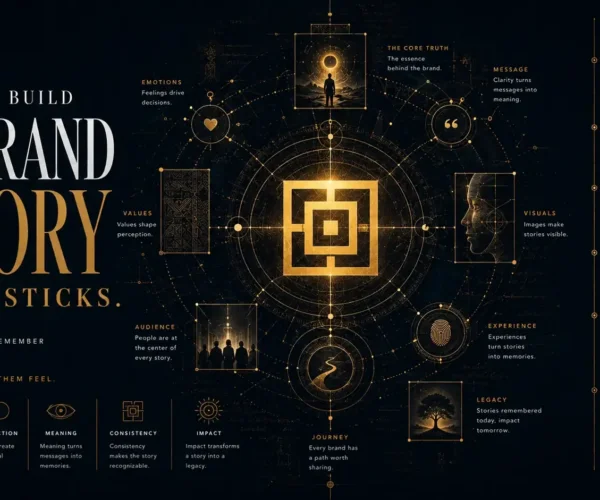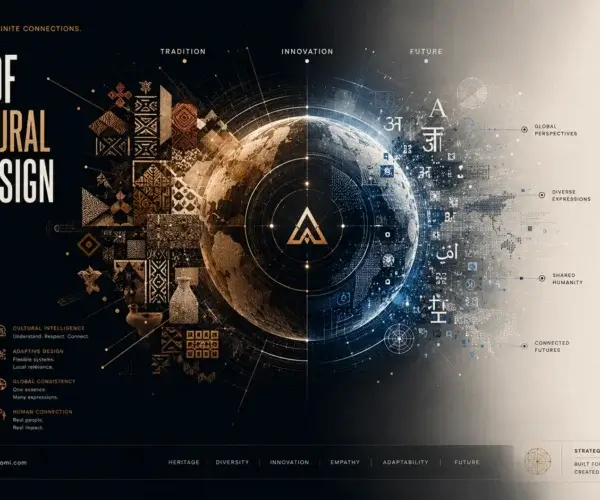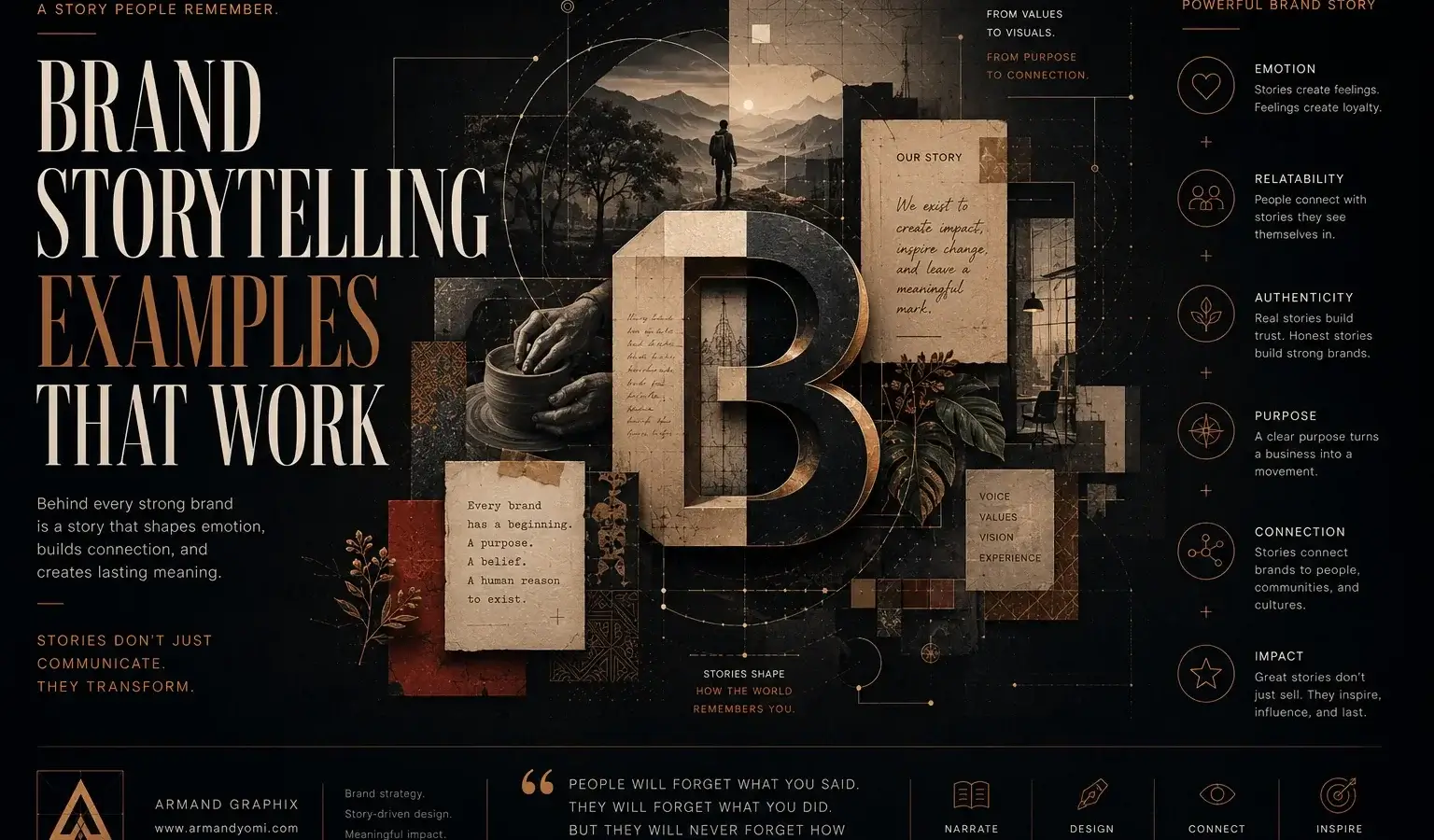
Some brands spend months refining a logo, a website, or a product launch, then wonder why the market still feels indifferent. Usually, the problem is not effort. It is narrative. The strongest brand storytelling examples do more than look polished – they give people a reason to care, remember, and choose.
Story is not decoration added after strategy. It is strategy made visible. When a brand knows what it stands for, who it serves, and how it wants to be remembered, the design gets sharper, the messaging gets clearer, and the marketing performs with more consistency.
For founders, startups, and growing businesses, that matters. You are not competing only on quality or price. You are competing on meaning, perception, and trust. The right story can make a younger brand feel established, a small brand feel premium, and a local brand feel culturally relevant.
“Turn Your Brand Into a Story People Remember”
Explore powerful brand storytelling examples and discover how successful brands use emotion, purpose, and identity to create deeper connections.
Discover Storytelling Strategies →What strong brand storytelling examples have in common
The best examples are rarely the loudest. They work because every brand touchpoint says the same thing in a slightly different way. The visuals, tone, packaging, social content, and customer experience all reinforce one core idea.
That core idea usually comes from tension. Maybe the audience feels overlooked. Maybe the category feels generic. Maybe the product solves a practical problem but needs emotional relevance to stand out. Storytelling gives the brand a point of view inside that tension.
Good storytelling also has restraint. Not every brand needs a dramatic origin story or a cinematic campaign. Sometimes the story is simply this: we make complicated things feel simple, or we bring dignity to a routine purchase, or we create products that reflect a culture more honestly. The story works when it is specific enough to be felt and flexible enough to show up across channels.
9 brand storytelling examples worth studying
1. Nike turns performance into identity
Nike rarely sells just shoes. It sells the inner narrative of effort, ambition, and personal proof. Its storytelling works because it frames the customer as the protagonist, not the product.
That shift matters. Instead of saying a shoe has better cushioning or traction, Nike says movement means something. The athlete can be elite, amateur, young, older, famous, or unknown. The emotional thread stays intact. It is about becoming the version of yourself that action reveals.
For smaller brands, the lesson is not to imitate Nike’s scale. It is to understand how a product becomes part of identity. If your offer helps customers express discipline, creativity, confidence, heritage, or belonging, your story can carry more weight than features alone.
2. Apple makes simplicity feel aspirational
Apple is one of the clearest examples of storytelling through design. Its narrative is built into the product interface, packaging, photography, retail spaces, and copy. Everything supports the same idea: powerful technology should feel elegant and intuitive.
This is where many brands lose cohesion. They claim clarity in their messaging but create visual clutter. They say premium but communicate with inconsistency. Apple shows that story is not just what you say. It is what every detail implies.
The trade-off is that this kind of storytelling demands discipline. Simplicity is hard to maintain because every new campaign, feature, or offer creates pressure to add more. Brands that want this effect need a strong editorial instinct and a willingness to remove what does not support the central narrative.
3. Patagonia connects product, values, and consequence
Patagonia’s brand story is not just environmental language layered onto apparel. It consistently ties business decisions to a larger mission around sustainability and responsible consumption.
That consistency gives the narrative credibility. Customers do not simply hear what the brand believes. They can see how those beliefs shape products, campaigns, and public positioning. That is the difference between values as copy and values as operating principle.
Not every business needs a cause-led story. In fact, forcing one can weaken trust. But Patagonia shows that when a brand has a real conviction, it should shape both communication and action. Otherwise, the story feels rented rather than earned.
4. Airbnb sells belonging, not accommodation
Airbnb changed the category by reframing what travel could mean. Instead of focusing only on inventory, convenience, or price, it built a story around feeling at home anywhere.
That emotional promise expanded the brand beyond bookings. The platform became associated with local experience, personal connection, and a more human version of travel. The strongest part of the story was not novelty alone. It was the idea that travel could feel less transactional.
For service brands, this is a useful reminder. Customers often buy the emotional outcome around the service, not just the service itself. They want reassurance, confidence, ease, prestige, clarity, or connection. If you only market the transaction, you leave value on the table.
5. Dove reframed beauty through recognition
Dove’s storytelling became powerful when it stepped away from polished perfection and toward a broader, more human view of beauty. The campaigns resonated because they responded to a real cultural tension many people already felt.
This is where relevance matters. Great storytelling does not happen in a vacuum. It speaks into an existing conversation with a distinct point of view. Dove did not invent insecurity around beauty standards, but it recognized an opening and built a brand narrative that challenged the category’s norms.
There is also a caution here. Once a brand takes a social position, people will examine whether the entire business aligns with that message. Story-led campaigns can create strong visibility, but they also raise the standard for authenticity.
6. Oatly uses voice as a storytelling asset
Oatly proves that story can live in tone, not just in campaign concepts. Its packaging, ads, and messaging have a conversational, self-aware voice that feels distinct in a crowded shelf environment.
That voice does strategic work. It makes the brand recognizable before the customer fully evaluates the product. It also helps Oatly feel contemporary, opinionated, and human. In a category where many brands rely on similar wellness language, tone becomes differentiation.
Founders often underestimate this. A clear verbal identity can sharpen your entire brand presence, especially when budgets are limited. The right voice can make a simple package stronger, a landing page more memorable, and social content more cohesive.
7. Glossier built story with community first
Glossier grew by making its audience feel involved in the brand, not just targeted by it. The storytelling was rooted in customer habits, preferences, and aesthetic cues that reflected how the audience already wanted to present themselves.
This approach works because it reduces distance. The brand feels less like a lecturer and more like a participant in the culture around beauty. Product storytelling becomes stronger when customers can imagine themselves inside it.
That does not mean every brand should crowdsource its identity. Too much adaptation can blur the point of view. But Glossier shows the commercial value of listening well enough to make customers feel seen.
8. Mailchimp made expertise feel approachable
Mailchimp operates in a technical business space, yet its storytelling has long leaned on friendliness, creativity, and accessibility. That choice matters because many service platforms feel cold or overloaded with jargon.
By softening the experience through tone and visual character, Mailchimp turned a functional tool into a brand people could actually enjoy engaging with. This is especially relevant for B2B brands. Professional does not have to mean rigid. Clear expertise often lands better when the brand feels usable and human.
If your business sells something complex, storytelling can translate sophistication into confidence. The customer should feel guided, not tested.
9. A local brand with cultural depth can outstory bigger players
Not every memorable story comes from a global company. Smaller brands often have an advantage because they are closer to the founder’s vision, the audience’s reality, and the cultural nuances larger companies flatten.
A restaurant can tell a richer story through menu design, interiors, and photography rooted in heritage. A product brand can stand out through packaging that reflects a community with respect instead of cliché. A service business can build trust by aligning its visual identity, case studies, and client experience around one clear promise. That is where narrative-led design earns its value.
For businesses building visibility in competitive markets, including places like Calgary where creative and commercial expectations continue to rise, this is not a branding luxury. It is a growth tool. When story, design, and digital strategy move together, the brand becomes easier to recognize and easier to choose.
How to use these brand storytelling examples in your own brand
The point is not to borrow another company’s aesthetic. It is to study the structure underneath it. What tension is the brand speaking to? What emotional outcome does it promise? How does that promise show up visually, verbally, and experientially?
Start there. Define the belief behind your business, not just the offer. Then test whether your identity system supports that belief. Does your logo feel aligned with your positioning? Does your website sound like the same brand your social content suggests? Does your packaging or presentation communicate the level of value you want customers to perceive?
If the answer is inconsistent, the story is probably fragmented. That hurts performance more than many businesses realize. Strong storytelling does not replace marketing execution, but it makes every campaign work harder because the audience understands what they are looking at and why it matters.
The brands people remember are rarely the ones saying the most. They are the ones expressing one clear idea with confidence, craft, and repetition. That is where story stops being content and starts becoming brand equity.
“Your Brand Has a Story. Make People Feel It.”
Learn how storytelling transforms ordinary brands into meaningful experiences that audiences recognize, trust, and remember.
Build Your Brand Story →- WordPress Versus Custom Websites for Growing Brands
 WordPress versus custom websites: compare cost, speed, control, SEO, and growth to choose a site that supports your brand and business goals clearly.
 - What Does Brand Strategy Include for Growth?
 What does brand strategy include? Learn the research, positioning, identity, messaging, and marketing choices that turn a business into a distinct brand.
 - Packaging Design Guide for Retail Brands
 A packaging design guide for retail brands: build shelf impact, meet production realities, and turn a first glance into a confident purchase decision.
 - Multicultural Branding Trends 2026 for Modern Brands
 Multicultural branding trends 2026 will reward brands that pair cultural intelligence, inclusive design, and local relevance with measurable, real growth.
 - Custom Logo vs Template: What Fits Your Brand?
 Custom logo vs template: compare cost, speed, ownership, and brand impact to choose an identity that builds your launch, growth, and reputation today.
 - What Is a Visual Identity? Design That Builds Trust
 What is a visual identity? Learn how logos, color, typography, and systems create recognition, trust, and stronger brand growth for ambitious businesses.