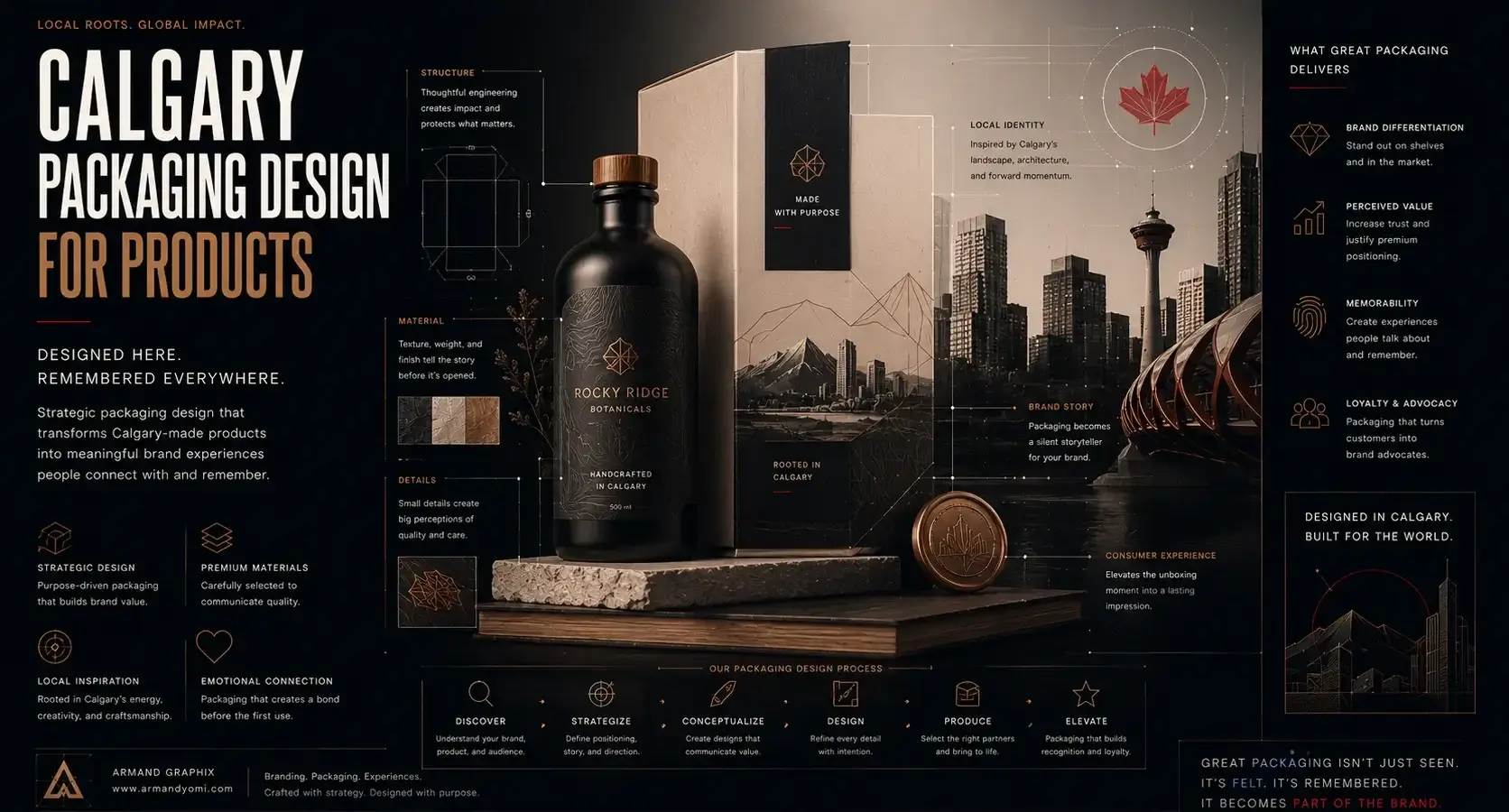
A customer gives you three seconds. Sometimes less. On a retail shelf, at a market table, or in a social media unboxing clip, your packaging has to do more than look attractive. It has to communicate value fast. That is why Calgary packaging design for products should never be treated as a finishing touch. It is part brand identity, part sales tool, and part customer experience.
For founders and growing businesses, packaging often sits right at the point where creative ambition meets commercial reality. You want it to feel distinctive, but it also has to print well, survive shipping, fit your margins, and make sense to the people you want to reach. Good packaging design lives in that balance. It tells your story clearly, then helps the product move.
“Make Your Product Stand Out in Calgary’s Market”
Discover how strategic packaging design helps local businesses create stronger identities and memorable customer experiences.
Design Your Product Packaging →What strong packaging design really does
Packaging is often judged by appearance first, but its job is broader than aesthetics. It shapes perception before anyone tests the product itself. A clean, intentional label can suggest quality. Thoughtful structure can signal care and professionalism. Even small decisions like type hierarchy, finish, and spacing affect whether a brand feels premium, approachable, modern, natural, or mass market.
That first impression matters because people rarely experience your brand in a perfectly controlled environment. They encounter it next to competitors, in poor lighting, on a cluttered shelf, inside a delivery box, or through a phone screen. Packaging has to hold its meaning across all of those moments.
The best work does not simply decorate a container. It creates recognition. It builds trust. It gives customers cues about price point, product category, and brand personality without forcing them to work for the answer.
Calgary packaging design for products starts with positioning
Before colors, mockups, or dielines, there is a more useful question: what should this product feel like in the market? Not just to you, but to the person buying it.
A product aimed at boutique retail will need different visual language than one designed for fast-moving ecommerce sales. A wellness brand may need to balance calm and credibility. A food product may need appetite appeal and instant clarity. A beauty product may need to look refined in person and photogenic online. These are not minor stylistic differences. They shape the entire system.
This is where many businesses lose momentum. They jump into design trends before defining the message. The result is packaging that looks current for a moment but does not clearly express the brand. Strong positioning gives the design a center of gravity. It helps every visual choice feel purposeful.
For businesses building in competitive categories, this matters even more. If your product sits in a crowded space, visual similarity can make you invisible. If it becomes too experimental, customers may not understand what they are buying. The right answer is rarely extreme. It is usually a disciplined mix of familiarity and distinction.
Story matters, but clarity comes first
Founders often have rich stories behind their products. That is an advantage, but packaging cannot carry every detail at once. Good storytelling in packaging is selective. It identifies the one or two ideas that deserve immediate attention and builds around them.
Sometimes the lead story is origin. Sometimes it is craftsmanship, function, ingredients, sustainability, or cultural influence. What matters is that the story supports the buying decision rather than distracting from it.
If a customer cannot quickly identify what the product is, who it is for, or why it is worth the price, the design is not doing enough. This is especially true for emerging brands that do not yet have widespread recognition. You do not earn mystery first. You earn clarity first, then personality.
That is why typography, naming placement, product descriptors, and information hierarchy matter so much. Packaging needs a visual rhythm. The eye should know where to land, what to understand first, and what to explore next.
The visual details that change perception
A lot of packaging performance comes down to details most customers would never consciously name. They may not say the kerning feels precise or the contrast ratio improves legibility, but they feel the effect. Design craft changes how polished and trustworthy a product appears.
Type selection is one of the clearest examples. A beautiful font can still be the wrong choice if it hurts readability or pushes the brand into the wrong category signal. Color works the same way. It is not just about taste. It affects visibility, emotional tone, and how your product competes visually in context.
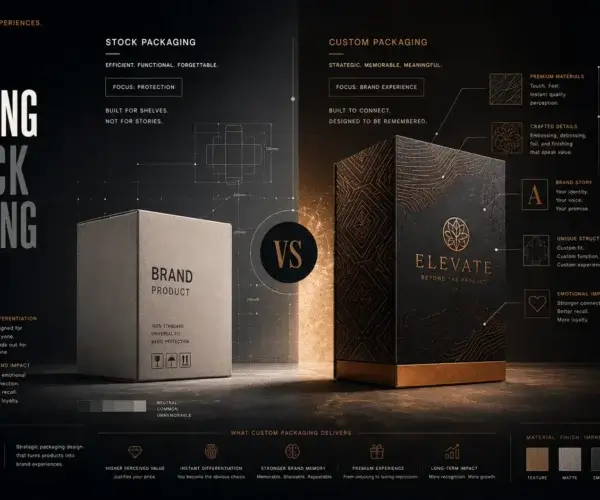
Material and finish also shape perception. Matte stock can feel understated and premium. Gloss can add energy and saturation. Soft-touch, foil, embossing, or specialty labels can elevate the experience, but only when they support the brand story and budget. Added effects without strategy often feel forced.
There are also practical design choices that protect the brand. Does the package still look strong at a small size? Does the label work on curved surfaces? Will key information remain legible after production? Will the structure photograph well for ecommerce? These questions separate attractive concepts from usable packaging systems.
Calgary packaging design for products has to work in print and online
Today, packaging is rarely experienced in one place. The same product may appear on a shelf, in a product listing, inside a social ad, and in a customer-created video. That means the design has to perform across physical and digital environments.
This is where strategic packaging becomes more valuable than purely decorative packaging. On shelf, your design needs stopping power and quick communication. Online, it needs shape, contrast, and composition that still read clearly in thumbnails and mobile screens. During unboxing, it needs enough personality to feel intentional and memorable.
If your packaging only works under studio lighting in a polished mockup, it is not finished. The strongest systems are designed with real use in mind. They hold up across photography, ecommerce assets, printed labels, and future line extensions.
For brands trying to grow visibility, this crossover matters. Packaging is not isolated from marketing. It supports content creation, paid campaigns, brand recall, and conversion. Design that tells your story should also make promotion easier.
Production realities shape the best creative decisions
Ambitious ideas are valuable, but production constraints are real. Budget, print method, minimum order quantities, shipping durability, and regulatory requirements all affect what is possible. Ignoring those realities early can lead to expensive revisions later.
This does not mean safe design is the answer. It means intelligent design is. A smart packaging system knows where to invest and where to simplify. Sometimes one strong structural feature or one well-chosen finish creates more impact than layering several expensive effects. Sometimes a flexible label system is more practical than fully custom packaging during early growth.
There is always a trade-off. More complexity can increase visual drama, but it can also slow production and reduce consistency. Lower-cost materials can protect margins, but they may weaken perceived value if chosen poorly. Sustainable options may align with the brand, though they may also shift texture, print quality, or cost. Good design does not ignore these tensions. It works through them.
This is especially important for startups and small businesses. Packaging should support scale, not trap the brand in a system it cannot maintain. A design that looks excellent on the first run but becomes too costly to repeat is not a long-term win.
What businesses should prepare before starting
The packaging process becomes stronger when the business side is clear. Founders do not need every answer, but they do need enough direction to make strategic decisions. Product details, audience insight, sales channel, competitive context, and pricing all influence the design outcome.
It also helps to know what role packaging is expected to play. Is the goal to break into retail? Improve perceived value? Appeal to a different customer segment? Support a rebrand? Increase giftability? Different goals lead to different creative priorities.
The most effective collaborations happen when design is treated as problem-solving, not decoration. That mindset creates better questions, sharper concepts, and stronger commercial results. It also leaves room for the kind of storytelling that makes a brand memorable.
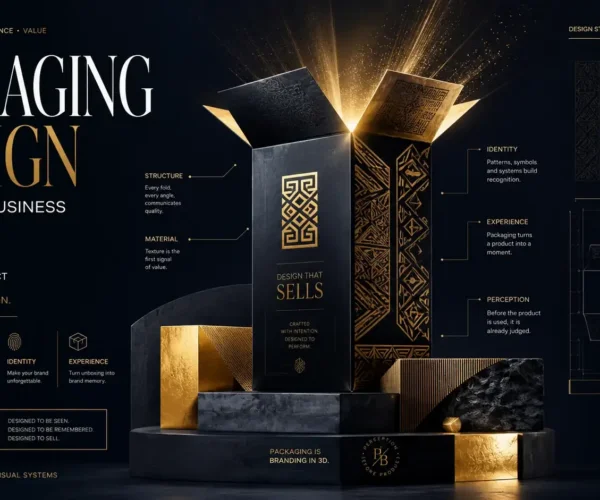
At its best, packaging is where identity becomes tangible. People do not just see it. They hold it, judge it, share it, and remember it. If you want your product to compete with confidence, start there – with design that looks right, feels right, and earns its place in the market.
“Your Packaging Is Your First Brand Experience.”
Learn how thoughtful packaging design can increase perceived value, build trust, and help your product compete in a crowded market.
Elevate Your Product Brand →- WordPress Versus Custom Websites for Growing Brands
 WordPress versus custom websites: compare cost, speed, control, SEO, and growth to choose a site that supports your brand and business goals clearly.
 - What Does Brand Strategy Include for Growth?
 What does brand strategy include? Learn the research, positioning, identity, messaging, and marketing choices that turn a business into a distinct brand.
 - Packaging Design Guide for Retail Brands
 A packaging design guide for retail brands: build shelf impact, meet production realities, and turn a first glance into a confident purchase decision.
 - Multicultural Branding Trends 2026 for Modern Brands
 Multicultural branding trends 2026 will reward brands that pair cultural intelligence, inclusive design, and local relevance with measurable, real growth.
 - Custom Logo vs Template: What Fits Your Brand?
 Custom logo vs template: compare cost, speed, ownership, and brand impact to choose an identity that builds your launch, growth, and reputation today.
 - What Is a Visual Identity? Design That Builds Trust
 What is a visual identity? Learn how logos, color, typography, and systems create recognition, trust, and stronger brand growth for ambitious businesses.