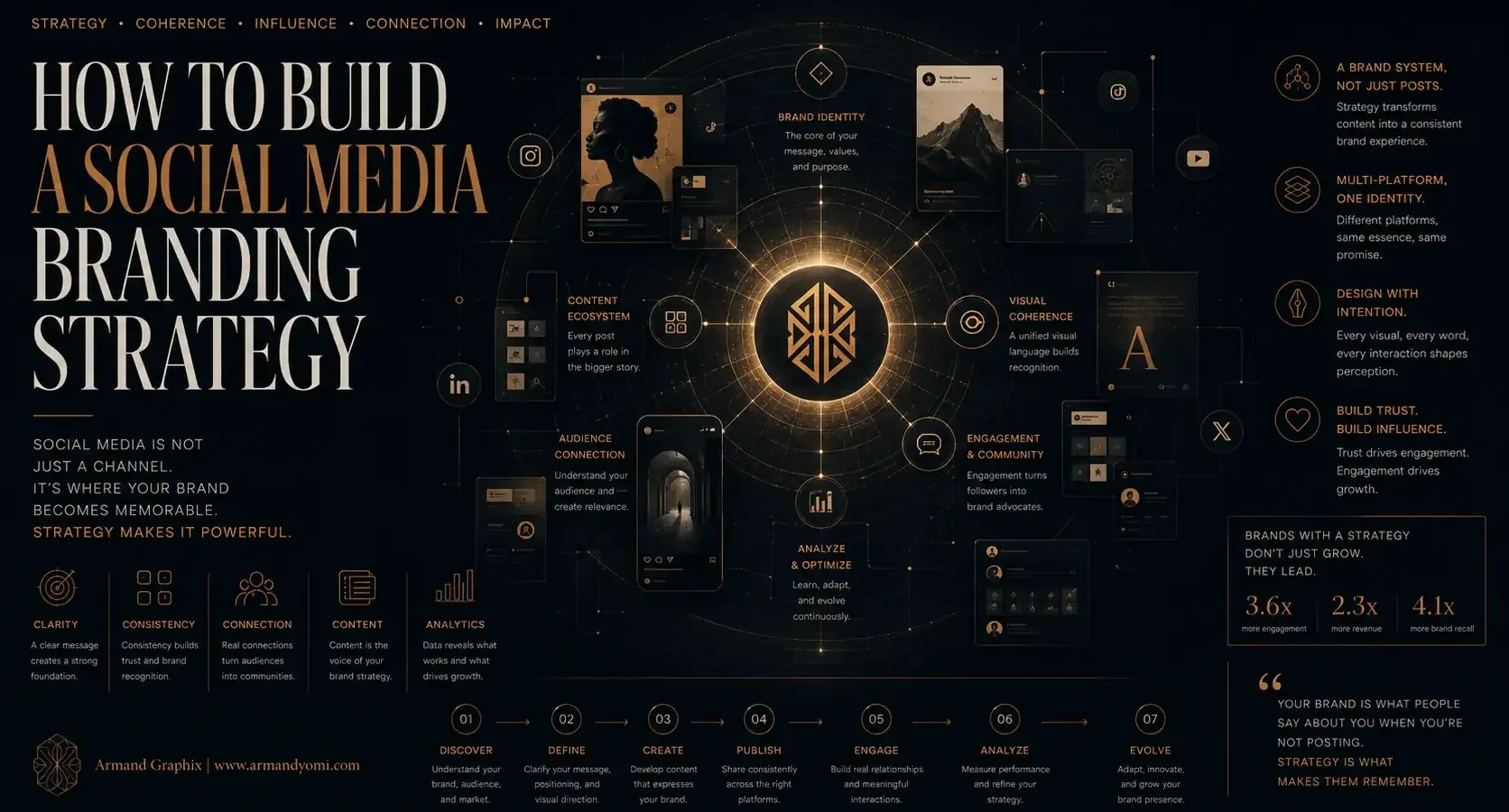
A brand can look exceptional on its website and still feel forgettable on social media. That gap usually comes from one problem: the business is posting content, but it is not operating from a clear social media branding strategy.
On social platforms, people do not meet your brand through a polished brand deck first. They meet it through a profile photo, a caption, a carousel, a short video, a comment reply, or the rhythm of your content over time. Every one of those touchpoints shapes perception. If they feel inconsistent, rushed, or disconnected from your larger brand story, trust weakens before a sales conversation even starts.
If your social presence feels busy but not distinctive, the answer is rarely more posting. It is better strategy, sharper expression, and a brand experience people can recognize before they even see your name.
“Turn Your Social Media Into a Recognizable Brand.”
Learn how to create a consistent social media branding strategy that builds trust, increases visibility, and strengthens audience loyalty.
Build Your Brand Strategy →What a social media branding strategy really does
A social media branding strategy is not just a posting plan. It is the system that connects your brand identity to the way your business shows up across platforms. It defines how your visuals, messaging, tone, content themes, and audience experience work together so people recognize you quickly and remember you for the right reasons.
That matters because recognition is rarely built through one great post. It is built through repeated signals. Consistent typography, a clear voice, thoughtful color use, predictable content themes, and a point of view all help your audience understand what your brand stands for. Strategy creates coherence. Coherence creates trust.
This is where many growing brands get stuck. They invest in a logo, maybe even a full visual identity, but social media becomes an afterthought managed week to week. The result is familiar: polished branding in one place, generic content in another. A strong strategy closes that gap.
Start with brand clarity before platform tactics
Before choosing post formats or content calendars, define the brand signals you want your audience to experience. Social media amplifies what already exists. If the core identity is unclear, the content will feel scattered no matter how often you post.
Begin with the essentials. What does your brand want to be known for? What emotional response should your audience feel when they encounter your content? What values shape the way you communicate? A premium product brand, a founder-led consultancy, and a community-focused local business may all use Instagram, but they should not sound or look interchangeable.
This is also where positioning matters. If your business serves ambitious startups, your social presence should reflect momentum, clarity, and confidence. If you serve a highly visual consumer market, design consistency may carry more weight. If your service is complex or high-ticket, education and authority may need to lead. Good strategy is never one-size-fits-all.
Build the visual system for social media branding strategy
Your social content should feel like an extension of your brand, not a separate identity. That does not mean every post must look identical. It means there should be a recognizable system behind the design.
A strong visual system usually includes a focused color palette, consistent type treatments, image direction, layout rules, and repeatable graphic elements. These details matter more than many brands realize. Audiences scroll fast. They often recognize a brand before they read a single word.
The balance, though, is important. Too much consistency can make content feel rigid or overly designed. Too little makes it forgettable. The best social brands create enough structure to be recognizable while leaving room for variation, relevance, and platform-native expression.
If your business has already invested in brand identity work, social should translate that identity rather than dilute it. If not, social media often reveals where the visual brand needs refinement. In that sense, content performance can become a branding diagnostic.
Voice matters as much as visuals
Many businesses think branding on social begins with templates. In practice, it often begins with language. The way you write captions, respond to comments, frame offers, and explain your expertise plays a major role in how your brand is perceived.
A social media branding strategy should define voice in practical terms. Not just “professional” or “friendly,” but how that tone actually sounds in motion. Does your brand speak with concise authority, or with conversational warmth? Is your message insight-driven, witty, bold, refined, or educational? The answer should reflect both your audience and your positioning.
What matters most is alignment. A visually elevated brand with weak, generic captions creates friction. A sophisticated service brand that sounds uncertain online loses credibility. Strong brands reduce that friction by making their language as intentional as their design.
Content pillars keep the brand focused
Without content pillars, social media tends to swing between random promotion and trend chasing. Neither builds brand equity well. Content pillars give your audience a consistent reason to follow you because they create recognizable patterns in what you talk about.
For most businesses, three to five pillars are enough. These might include brand story, educational insight, behind-the-scenes process, client transformation, product or service highlights, and founder perspective. The right mix depends on your business model, industry, and audience maturity.
The key is not just variety. It is strategic repetition. If your brand wants to be known for design expertise, thoughtful storytelling, and measurable business growth, your content should reinforce those associations regularly. Over time, your audience begins to connect your name with those qualities.
That is where brand strength grows. Not from saying everything, but from saying the right things often enough that people remember.
Choose platforms based on brand behavior, not pressure
Not every brand needs to be active everywhere. A disciplined social media branding strategy starts by asking where your audience actually engages and what type of content best expresses your brand.
Instagram may be ideal for visually driven businesses, product brands, and founders with strong aesthetic storytelling. LinkedIn may be stronger for B2B credibility, strategic insight, and professional trust. TikTok can reward personality, speed, and cultural relevance, but it is not always the right fit for premium positioning or limited production capacity.
There is always a trade-off. More platforms can create more visibility, but they also increase the chance of inconsistency. For many small businesses and growing brands, doing two platforms well is far more effective than doing five poorly.
Consistency is not frequency alone
A common mistake is treating consistency as a publishing issue only. Posting three times a week means very little if the content lacks strategic cohesion. Real consistency is cumulative. It is how the visuals, topics, tone, and calls to action reinforce each other over time.
That does not mean your content should become repetitive or stale. It means your audience should be able to recognize your perspective. They should know what kind of value to expect from you. That expectation builds trust, and trust improves response.
This is also why reactive posting often underperforms. Content built only around trends can generate brief spikes in attention, but it does not always strengthen the brand. Trend participation can work well when it supports your positioning. When it distracts from it, the brand pays the price.
Measure brand impact beyond vanity metrics
A strong strategy is creative, but it should also be accountable. The challenge is that social branding success is not always captured by likes alone. Reach and engagement matter, but they are not the full story.
Look for indicators that your brand is becoming clearer and more credible. Are people describing your business in the language you want to own? Are more inquiries coming from social channels? Are followers saving, sharing, or replying in ways that show trust and relevance? Are your profile visits and website actions improving after branded content campaigns?
Brand metrics often move before direct conversion metrics do. That does not make them soft. It means they sit earlier in the decision journey. Smart businesses measure both attention and action.
Where strategy usually breaks down
Most social brands do not fail because they lack ideas. They fail because the brand foundation and the content execution are disconnected. The design looks one way, the messaging sounds another, and the business goals sit somewhere else entirely.
Sometimes the issue is unclear positioning. Sometimes it is inconsistent execution across posts. Sometimes the visuals are attractive, but the content says very little. In other cases, the content is useful, but the brand identity is too generic to be memorable.
This is why social media branding works best when design thinking and marketing thinking are built together. The visual identity should support recognition. The messaging should support trust. The content strategy should support growth. When those parts align, social media stops being a content chore and starts acting like a real brand asset.
For founders and small business owners, that alignment is often the difference between looking active online and actually becoming known.
If your social presence feels busy but not distinctive, the answer is rarely more posting. It is better strategy, sharper expression, and a brand experience people can recognize before they even see your name.
“Stop Posting Random Content. Start Building Brand Equity.”
Discover the strategic framework that helps businesses create meaningful social media experiences and long-term brand recognition.
Explore the Framework →- WordPress Versus Custom Websites for Growing Brands
 WordPress versus custom websites: compare cost, speed, control, SEO, and growth to choose a site that supports your brand and business goals clearly.
 - What Does Brand Strategy Include for Growth?
 What does brand strategy include? Learn the research, positioning, identity, messaging, and marketing choices that turn a business into a distinct brand.
 - Packaging Design Guide for Retail Brands
 A packaging design guide for retail brands: build shelf impact, meet production realities, and turn a first glance into a confident purchase decision.
 - Multicultural Branding Trends 2026 for Modern Brands
 Multicultural branding trends 2026 will reward brands that pair cultural intelligence, inclusive design, and local relevance with measurable, real growth.
 - Custom Logo vs Template: What Fits Your Brand?
 Custom logo vs template: compare cost, speed, ownership, and brand impact to choose an identity that builds your launch, growth, and reputation today.
 - What Is a Visual Identity? Design That Builds Trust
 What is a visual identity? Learn how logos, color, typography, and systems create recognition, trust, and stronger brand growth for ambitious businesses.