A brand can be technically polished and still feel forgettable. That gap is where emotional design matters. It is the difference between visuals people simply notice and visuals they connect with, remember, and trust.
For founders and growing businesses, this is not a soft idea. It affects how your brand is perceived at first glance, how long people stay on your website, how your packaging competes on a shelf, and whether your identity feels credible enough to buy from. Good design gets attention. Emotional design gives that attention meaning.
“Strong brands are not only recognized.”
They create emotional connection, trust, and long-term memorability.
Build a Brand People Remember →What emotional design really means
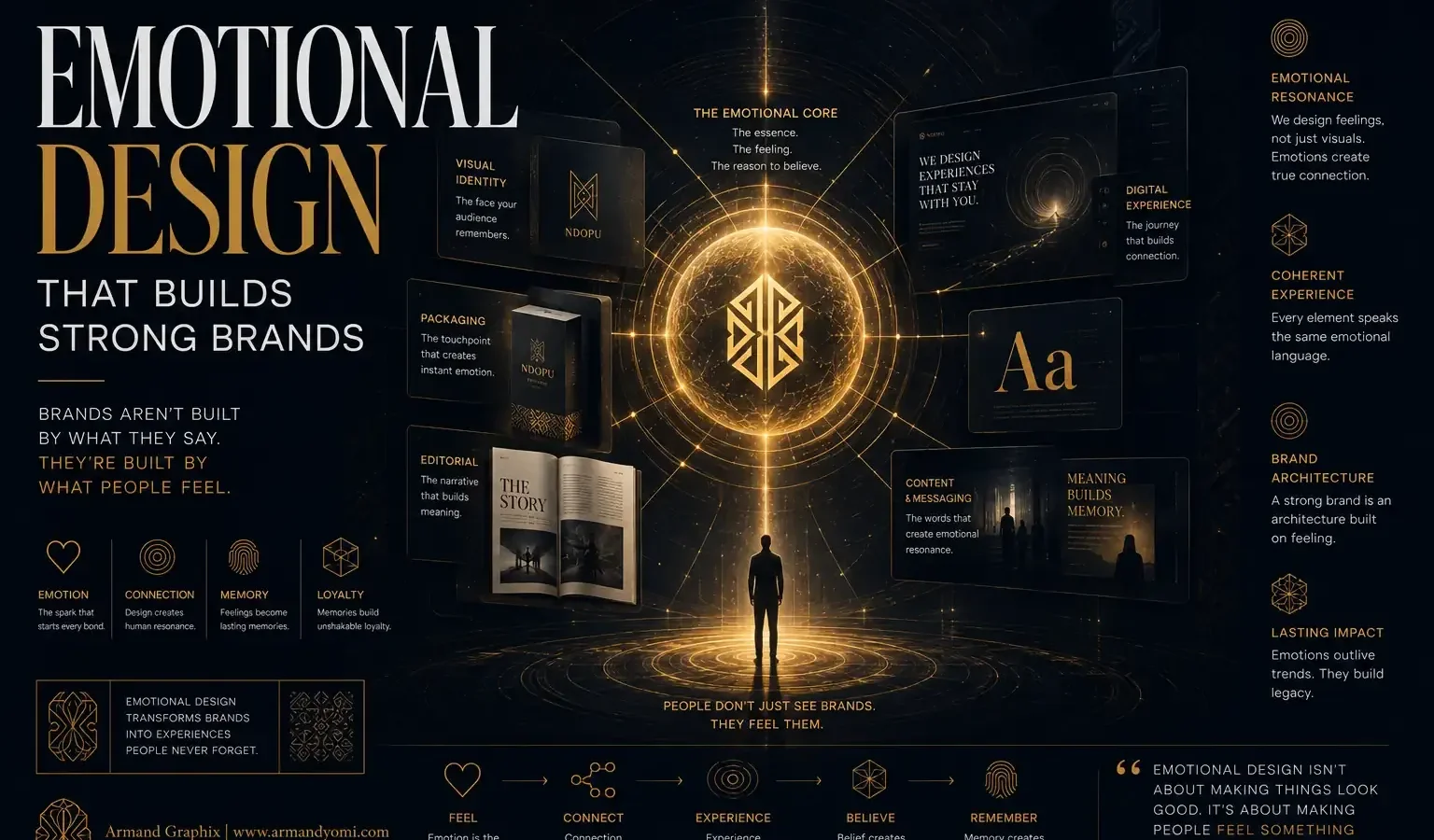
Emotional design is the practice of shaping visual and digital experiences around human feeling, not just function. It uses color, typography, imagery, pacing, composition, and language to create a response. That response might be trust, excitement, calm, curiosity, elegance, urgency, or belonging.
In branding, those feelings are not accidental. They are built. A luxury skincare brand should not feel the same as a youth-focused streetwear label. A nonprofit should not speak with the same visual rhythm as a high-growth tech startup. The emotional layer is what gives each brand its own gravity.
This is also where many businesses get stuck. They focus on looking modern, clean, or professional, which are useful qualities but not enough on their own. If your brand only looks correct, it may still fail to feel distinct.
Why emotional design matters in branding
People do not make decisions based on logic alone. Even in B2B, where buyers compare budgets, features, and timelines, perception still shapes trust. Before someone reads your proposal or studies your offer, they react to your presentation.
That reaction happens fast. Your visual identity signals whether your brand feels established, relevant, premium, friendly, disruptive, or thoughtful. If those signals are mixed, the market feels it. If they are aligned, your brand becomes easier to recognize and easier to choose.
This is why emotional design has real commercial value. It improves memorability, sharpens positioning, and supports consistency across touchpoints. A strong identity does not just decorate your business. It helps the right audience see themselves in what you offer.
Emotional design across key brand touchpoints
In brand identity, emotional design appears in the fundamentals. Typography can feel refined, bold, playful, or grounded. Color can suggest confidence, warmth, heritage, energy, or restraint. Even spacing and layout affect perception. A crowded layout creates one emotional pace. A spacious one creates another.
On websites, emotional design shapes the user experience beyond usability. Yes, the site should be clear and easy to navigate. But it should also feel like your brand. The flow of content, the balance of text and image, the tone of headlines, and the visual hierarchy all influence how people experience your business. A website that functions well but feels generic often underperforms because it lacks emotional conviction.
In packaging, emotional design becomes immediate and tactile. Customers respond not only to what a product says, but to how it feels in the hand and reads on the shelf. Materials, finishes, structure, and graphic choices all contribute to perceived value. In crowded retail environments, emotional clarity can be the deciding factor.
Emotional design is not decoration
A common mistake is treating emotional design as a layer applied after strategy. In strong branding, it works the other way around. The emotional response should come from the brand story, the market position, and the audience insight.
If a founder wants the brand to feel premium, the question is not simply which colors look expensive. The deeper question is what premium means in that category. Quiet confidence? Editorial minimalism? Rich heritage? Contemporary exclusivity? The answer changes the design system.
This is where strategy matters. Emotional design without strategic grounding can look beautiful and still miss the market. It may attract the wrong audience, overpromise the experience, or blend into familiar trends. Real impact comes from connecting emotion to positioning.
How to use emotional design well
Start by defining the emotional outcome before choosing visual assets. Ask what your audience should feel in the first five seconds of seeing your brand. Then ask whether that feeling supports your business goals.
From there, build with intention. Choose typography that supports the personality of the brand. Use color for meaning, not just taste. Shape layouts that reflect the right pace and energy. Write headlines and messaging that sound like the brand, not like a template.
It also helps to test your assumptions. What feels premium to one audience may feel cold to another. What feels playful in one culture may feel unserious in another. For brands working across diverse markets, intercultural awareness is not an extra. It is part of designing emotional relevance.
At Armand Graphix, this is where design becomes more than style. It becomes a tool for telling a sharper story and creating stronger market response.
The brands people remember usually make people feel something
Memorable brands are rarely the ones that say the most. They are the ones that create a clear emotional impression and repeat it consistently. That impression becomes recognition. Recognition becomes trust. And trust creates momentum.
If your brand looks polished but does not feel meaningful, emotional design may be the missing layer. Not because every brand needs drama, but because every strong brand needs resonance. The goal is simple: design that tells your story in a way people can feel.
“Your visuals should do more than look polished.”
They should make people feel something meaningful.
Create an Emotionally Resonant Brand →- WordPress Versus Custom Websites for Growing Brands
 WordPress versus custom websites: compare cost, speed, control, SEO, and growth to choose a site that supports your brand and business goals clearly.
 - What Does Brand Strategy Include for Growth?
 What does brand strategy include? Learn the research, positioning, identity, messaging, and marketing choices that turn a business into a distinct brand.
 - Packaging Design Guide for Retail Brands
 A packaging design guide for retail brands: build shelf impact, meet production realities, and turn a first glance into a confident purchase decision.
 - Multicultural Branding Trends 2026 for Modern Brands
 Multicultural branding trends 2026 will reward brands that pair cultural intelligence, inclusive design, and local relevance with measurable, real growth.
 - Custom Logo vs Template: What Fits Your Brand?
 Custom logo vs template: compare cost, speed, ownership, and brand impact to choose an identity that builds your launch, growth, and reputation today.
 - What Is a Visual Identity? Design That Builds Trust
 What is a visual identity? Learn how logos, color, typography, and systems create recognition, trust, and stronger brand growth for ambitious businesses.