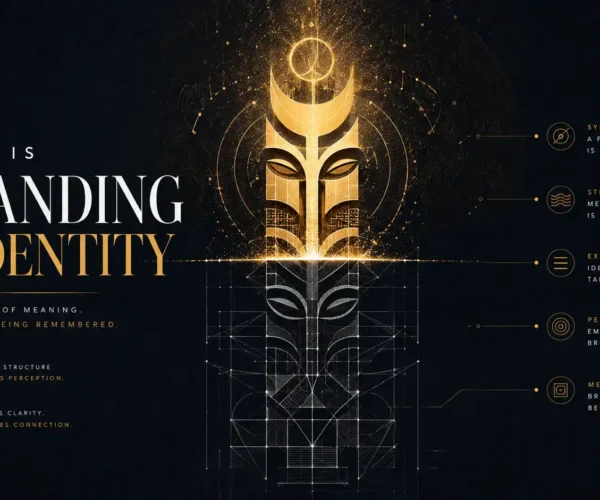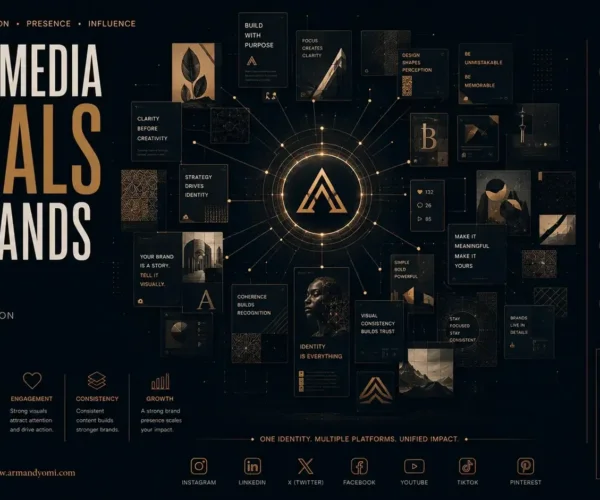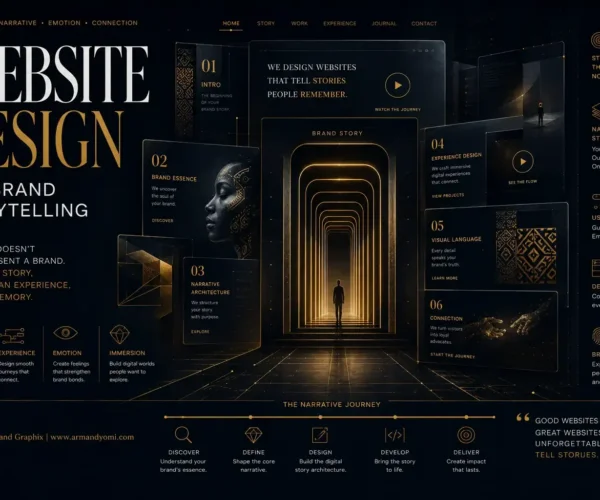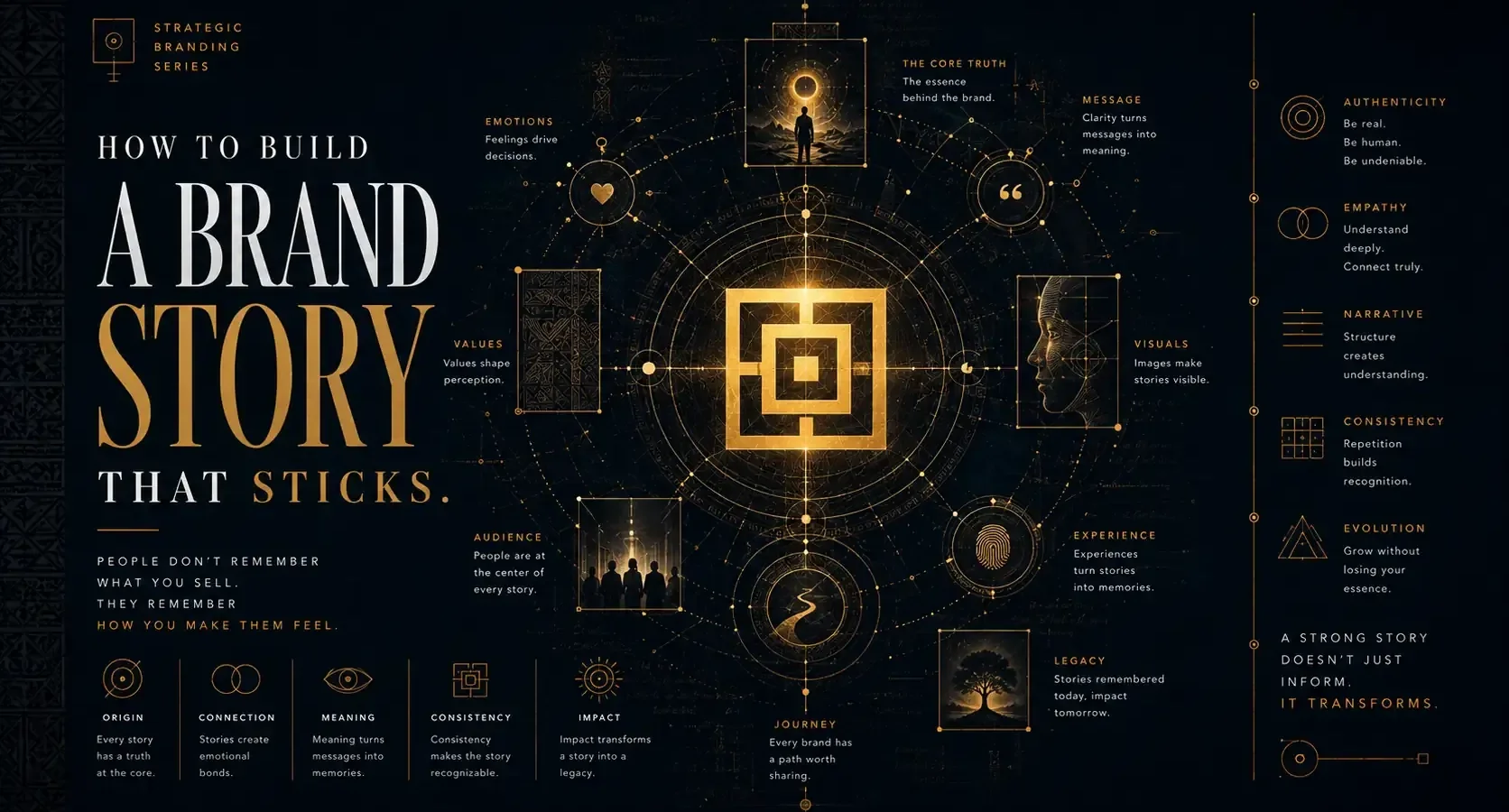
Most brands do not have a visibility problem first. They have a meaning problem. People see the logo, read the headline, maybe even visit the website – and still leave without remembering why the brand matters. That is exactly why learning how to build a brand story matters. A good story gives your brand shape. A strong one gives it momentum.
Brand story is often misunderstood as a clever paragraph on an About page. It is much more than that. It is the logic and emotion behind your identity, your offer, your voice, and the way people experience your business over time. If your visuals say one thing, your messaging says another, and your marketing says something else entirely, the problem is not creativity. The problem is narrative.
What a brand story actually does
A brand story is not fiction. It is not a dramatic origin tale unless your audience actually needs one. It is the clear through-line that explains who you are, what shaped your point of view, what you believe, who you serve, and why your work should matter to real people.
The best brand stories do three things at once. They create emotional recognition, they clarify market position, and they give design and marketing a shared direction. That last point is where many businesses get stuck. They invest in branding visuals before defining the story those visuals need to carry. The result may look polished, but it rarely feels memorable.
A real brand story also helps with consistency. It becomes easier to decide what your website should say, how your packaging should feel, what your social captions should sound like, and what kind of campaigns make sense. Story is not decoration. It is decision-making infrastructure.
“Is your brand emotionally memorable?”
Discover how strategic storytelling can transform perception into connection.
Build Your Brand Narrative →How to build a brand story from strategy, not guesswork
If you want a brand story that lasts, start before the slogan. The foundation is strategy. Not the abstract kind, but the kind that helps you understand your audience, your value, and your difference in a market full of noise.
Start with the tension your audience already feels
Every effective story begins with tension. In branding, that tension belongs to your customer, not your company. What are they frustrated by, trying to achieve, worried about, or moving away from? If you skip this step, your story becomes self-centered very quickly.
A founder might believe the heart of the story is the years spent building the business. Sometimes that history matters. Sometimes it does not. If your audience is trying to save time, reduce risk, look credible, or stand out in a crowded category, your story should connect to that lived reality first.
This is where nuance matters. Luxury buyers and startup buyers do not respond to the same kind of narrative. A boutique skincare brand may need a story built around trust, ritual, and sensory experience. A B2B consultancy may need a story built around clarity, confidence, and performance. The structure can be similar, but the emotional trigger is different.
Define your brand’s point of view
A memorable brand is not just recognizable. It is opinionated in the right way. Your brand story should communicate what you believe about your industry, your craft, or the change your audience wants to make.
This does not mean forcing a bold stance for attention. It means being clear about your perspective. Maybe you believe packaging should work as hard as advertising. Maybe you believe design should not only look good but improve conversion. Maybe you believe multicultural audiences deserve visual communication that feels informed rather than generic. A strong point of view creates a sharper story because it gives your audience something to align with.
Without that perspective, brand messaging often becomes interchangeable. You see the same claims everywhere – quality, passion, innovation, excellence. Those words are not wrong. They are just empty when they are not tied to a distinct belief.
Identify the transformation you deliver
People do not buy brand stories for entertainment. They buy into them because the story helps them imagine a better version of their own situation.
So ask a more useful question than what do we sell. Ask what changes because we exist. Does your service help founders look credible enough to enter bigger rooms? Does it help products earn attention on crowded shelves? Does it help businesses stop blending in and start attracting the right audience?
This transformation should sit at the center of your story. Not as hype, but as a clear before-and-after. If the shift is vague, the story will be vague too.
The core elements of a strong brand story
Once the strategic foundation is clear, the narrative becomes easier to shape. Most strong brand stories include a few essential elements, even if they are not presented in a formal sequence.
Your origin explains what led to the brand, but it should only stay if it adds relevance. Your mission gives the story direction. Your values show what guides your decisions. Your audience keeps the message grounded. Your differentiator explains why your approach is distinct. And your desired outcome makes the story useful to buyers.
That does not mean your website needs a long emotional essay. Often the strongest brand stories are expressed in concise, high-impact language. A headline, a short founder statement, a few supporting messages, and a visual system that reinforces the same idea can do more than a page of generic copy.
This is where design becomes critical. Typography, color, photography, layout, and brand voice should all support the narrative. If your story is about refinement and trust, but your visual identity feels chaotic, the message breaks. If your story is about bold cultural confidence, but your brand looks safe and generic, you lose depth.
How to build a brand story into your visuals and marketing
A story only works when it travels. It needs to move beyond your internal brand document and show up in the real touchpoints people experience.
Start with your visual identity. Ask whether your logo, color system, type choices, image direction, and layout style express the right emotional signal. Story should not be pasted onto design after the fact. It should shape the design logic from the beginning.
Then look at your messaging. Your homepage should quickly answer three things: who you help, what change you create, and why your approach is different. Your service pages should sound like extensions of the same narrative, not disconnected sales blurbs. Social media should reinforce the same brand energy. Email, packaging, presentations, and ads should all feel like chapters from the same story.
This is one reason integrated creative and marketing work matters. A story that lives only in design may look beautiful but fail to convert. A story that lives only in ad copy may perform briefly but feel shallow. The strongest brands align narrative, visuals, and growth strategy so each part strengthens the others.
Common mistakes when building a brand story
The first mistake is making the founder the hero. Your experience matters, but the customer should still be the one moving through the story. Your brand is the guide, not the center of the universe.
The second is confusing story with wording. Better copy can help, but weak positioning cannot be fixed by poetic language. If you have not defined your audience, belief, and transformation, the story will remain fragile.
The third is trying to sound bigger instead of sounding clearer. Many small businesses borrow the language of large corporations and lose their edge. Precision beats inflation. A focused story feels more credible than a grand one.
The fourth is ignoring cultural context. Brands speak to people shaped by different backgrounds, references, and expectations. If your audience is diverse, your story should be aware of that. Cross-cultural sensitivity is not a trend. It is part of effective communication.
When to refine your brand story
Sometimes you do not need a completely new story. You need a sharper one. If your business has evolved, your services have expanded, or your audience has changed, your narrative may simply be outdated.
Look for signs. Maybe leads keep asking what you actually do. Maybe your visuals feel stronger than your messaging. Maybe your website gets traffic but not traction. Maybe clients like the work but struggle to describe what makes you different. These are often story problems wearing other clothes.
For growing businesses, refining the story can create real commercial lift. It can improve how confidently you pitch, how clearly you price, how consistently you market, and how well your audience remembers you after the first interaction.
A better way to think about brand story
If you remember one thing, let it be this: your brand story is not a paragraph you write after the real work is done. It is part of the real work. It shapes how your brand is seen, understood, and chosen.
At its best, a brand story creates alignment between meaning and execution. It gives your audience something to feel, your team something to build from, and your marketing something more durable than short-term attention. Design that tells your story always works harder when the story itself is clear.
Build it with honesty. Shape it with strategy. Then make sure every visual, message, and campaign carries the same signal forward.
“Strong brands are remembered long before they are understood.”
Let’s create a visual story people never forget.
Start a Branding Project →- WordPress Versus Custom Websites for Growing Brands
 WordPress versus custom websites: compare cost, speed, control, SEO, and growth to choose a site that supports your brand and business goals clearly.
 - What Does Brand Strategy Include for Growth?
 What does brand strategy include? Learn the research, positioning, identity, messaging, and marketing choices that turn a business into a distinct brand.
 - Packaging Design Guide for Retail Brands
 A packaging design guide for retail brands: build shelf impact, meet production realities, and turn a first glance into a confident purchase decision.
 - Multicultural Branding Trends 2026 for Modern Brands
 Multicultural branding trends 2026 will reward brands that pair cultural intelligence, inclusive design, and local relevance with measurable, real growth.
 - Custom Logo vs Template: What Fits Your Brand?
 Custom logo vs template: compare cost, speed, ownership, and brand impact to choose an identity that builds your launch, growth, and reputation today.
 - What Is a Visual Identity? Design That Builds Trust
 What is a visual identity? Learn how logos, color, typography, and systems create recognition, trust, and stronger brand growth for ambitious businesses.