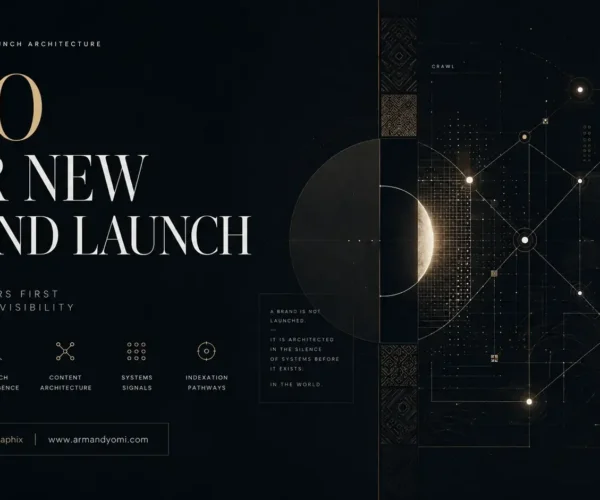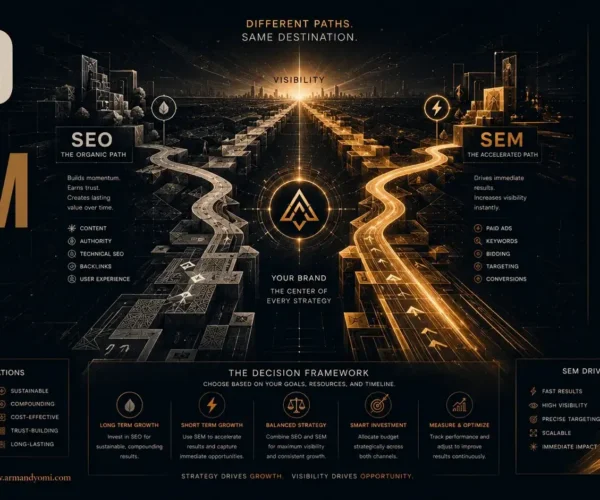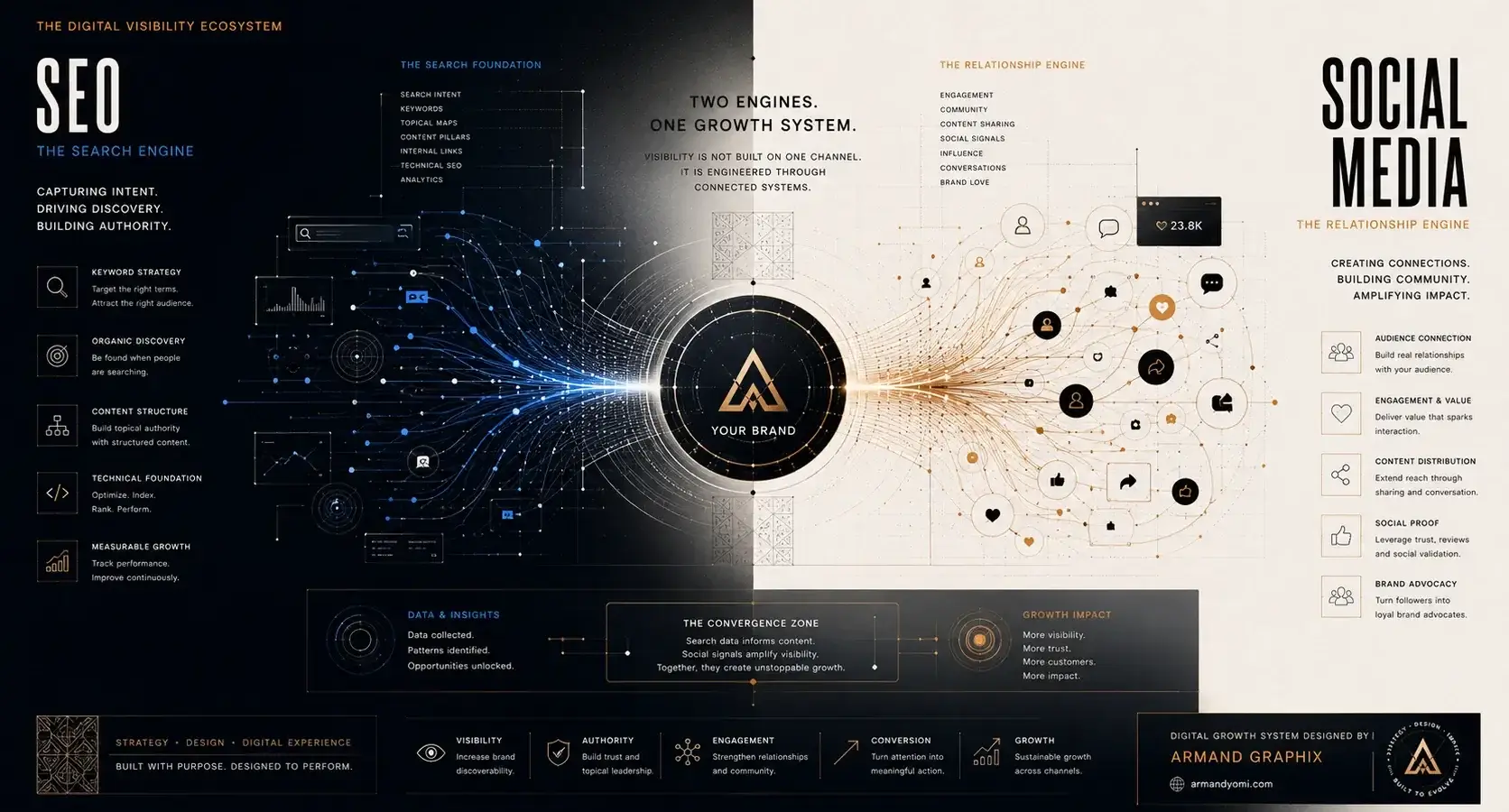
A polished brand can look exceptional and still struggle to get noticed. That is usually the moment when the real question appears: seo vs social media marketing – where should you invest first if you want visibility that actually turns into growth?
The honest answer is not as neat as most marketing hot takes make it sound. SEO and social media do very different jobs. One helps people find you when they are already looking. The other helps people notice you before they start searching at all. If your business is building a brand, not just chasing clicks, that distinction matters.
The best decision is rarely about freelancer versus agency as a fixed rule. It is about fit, trust, and whether the person or team in front of you can turn your vision into a brand people remember and a business people choose.
“SEO or Social Media? Build a Strategy That Uses Both”
Learn how search visibility and social engagement work together to create sustainable digital growth.
Build Your Digital Strategy →SEO vs social media marketing: the real difference
SEO is intent-driven. It puts your business in front of people who are actively searching for answers, services, products, or expertise. When someone types a need into Google, they are giving you a signal. They are telling you what matters to them, what problem they want solved, and often how close they are to making a decision.
Social media marketing works differently. It is attention-driven. People are not usually opening Instagram, LinkedIn, or TikTok to find a specific service provider. They are there to browse, compare, get inspired, or stay connected. Your content earns space in that environment by being visually compelling, relevant, and memorable.
That is why SEO often supports demand capture, while social media supports demand creation. SEO meets existing interest. Social media can spark it.
For founders, startups, and small businesses, this difference shapes everything from budget allocation to creative direction. If you need leads from people ready to buy, SEO has a strong case. If you need awareness, audience warmth, and brand recognition, social media often carries more immediate energy.
What SEO does best
SEO rewards clarity. It favors businesses that understand their audience’s questions and build content, pages, and site structure around those needs. It is less about noise and more about relevance.
A strong SEO strategy can keep working long after a page is published. A well-optimized service page, article, or local landing page can attract visitors for months, sometimes years. That makes SEO especially valuable for businesses that want compounding visibility rather than constant paid distribution.
It also tends to attract more qualified traffic. Someone searching for “brand designer for startups” or “packaging design agency” is not casually scrolling. They have intent. That intent often translates into better conversion potential.
There is also a credibility layer to SEO that many brands underestimate. Ranking well in search can make your business feel established before a prospect ever contacts you. It signals relevance and trust. In professional services, that matters.
Still, SEO has trade-offs. It usually takes longer to build momentum. It depends on technical health, content quality, site structure, and competition. If your website is thin, generic, or visually strong but strategically weak, SEO will expose that.
What social media marketing does best
Social media gives your brand a voice, a face, and a rhythm. It lets people experience your taste, point of view, and personality before they ever visit your website.
For visually led brands, this is powerful. Design, packaging, campaign visuals, behind-the-scenes process, founder stories, and client transformations all perform well because they make the brand feel alive. Social media is where aesthetics and narrative can work together in real time.
It is also faster. You can publish today and start learning today. You can test messaging, offers, visuals, and audience response without waiting months for search rankings to improve. That speed is useful when launching something new or trying to understand what resonates.
Social media also supports relationship building in a way SEO does not. People can follow you before they are ready to buy. They can watch your consistency, absorb your expertise, and build familiarity over time. That familiarity lowers resistance later.
But social media has its own limits. Attention is rented, not owned. Platforms change. Reach fluctuates. A great post can disappear in a day. If your entire marketing engine depends on constant posting, your visibility can become fragile.
Which channel brings better ROI?
This is where context matters.
If you sell a service people actively search for, SEO can deliver stronger long-term ROI. Think legal services, web design, commercial photography, consulting, home services, or B2B creative work. Search traffic often converts well because it comes with built-in intent.
If your offer is highly visual, trend-sensitive, community-driven, or impulse-friendly, social media may create faster returns. This is often true for fashion, beauty, lifestyle brands, food concepts, creators, and product launches where discovery matters as much as demand.
For many businesses, the smarter question is not which channel is better. It is which channel solves your current bottleneck.
If nobody knows you exist, social media can help generate attention. If people know you exist but cannot find you when they are ready to act, SEO becomes urgent. If your brand looks strong but your website does not convert, neither channel will perform the way it should.
SEO vs social media marketing for brand-building
A lot of businesses treat SEO as purely technical and social media as purely creative. That split is too simplistic.
SEO shapes how your brand is discovered. Social media shapes how your brand is perceived. One supports visibility through relevance. The other supports desirability through expression.
A founder with a sharp visual identity but no search presence may look credible on Instagram and still lose leads to competitors with stronger website architecture and better content. On the other hand, a business with strong rankings but weak social presence can feel invisible culturally, especially to younger or design-aware audiences who evaluate trust through more than search results.
Brand-building today sits at that intersection. People search. People scroll. Often they do both before making contact.
That is why the strongest marketing systems do not isolate channels. They connect them. A brand story introduced on social media should feel consistent when someone lands on the website. An SEO article should sound like it came from the same business that designed the visuals, wrote the captions, and shaped the customer experience.
When to prioritize SEO first
Start with SEO if your business depends on search intent, if your website is central to lead generation, or if your sales cycle includes research and comparison. This is especially relevant when clients need time to evaluate expertise, process, pricing, or specialization.
SEO also deserves early attention if you are investing in a premium brand position. Premium buyers research. They compare. They want reassurance that your presentation is not just beautiful but credible.
Local businesses should also take SEO seriously sooner rather than later. If someone searches for services in your area and your business is hard to find, you are missing demand that already exists.
When to prioritize social media first
Start with social media if your business is new and needs visibility quickly, if your offer is highly visual, or if your founder presence is part of the value proposition. It is often the fastest way to establish a recognizable brand voice and gather early audience signals.
It also makes sense when your buyers respond to proof through presentation. Before-and-after work, design process, case snapshots, product styling, and audience interaction all help build belief.
For creative businesses, social media can function like an active portfolio. It lets potential clients see not just what you make, but how you think.
The strongest approach is usually both, in sequence
If budget is limited, sequence matters more than scale.
Start by building a website that is clear, credible, and aligned with your brand story. Then create the SEO foundation around your core services, audience questions, and location if relevant. At the same time, use social media to distribute your point of view, showcase the work, and keep your brand present.
This is where strategy becomes more valuable than channel loyalty. A single article can support SEO. That same insight can become a carousel, a short video, a founder post, or a visual case study for social. One idea, expressed well, can do more than scattered effort across five platforms.
At Armand Graphix, that balance matters because design and growth should not compete with each other. The brand has to look right, sound right, and be findable.
So what wins?
If your goal is long-term discoverability, SEO often wins. If your goal is immediate attention and brand expression, social media often wins. If your goal is sustainable growth, neither wins alone.
The better choice is the one that fits your audience behavior, your buying cycle, and the kind of brand you are trying to build. Marketing works best when it reflects how people actually move – from curiosity to trust to action.
Build for that journey, and the channel question becomes much easier to answer.
“Stop Choosing Between Visibility and Connection”
Discover how SEO and social media can combine to attract customers and strengthen your brand presence.
Grow Your Online Presence →- WordPress Versus Custom Websites for Growing Brands
 WordPress versus custom websites: compare cost, speed, control, SEO, and growth to choose a site that supports your brand and business goals clearly.
 - What Does Brand Strategy Include for Growth?
 What does brand strategy include? Learn the research, positioning, identity, messaging, and marketing choices that turn a business into a distinct brand.
 - Packaging Design Guide for Retail Brands
 A packaging design guide for retail brands: build shelf impact, meet production realities, and turn a first glance into a confident purchase decision.
 - Multicultural Branding Trends 2026 for Modern Brands
 Multicultural branding trends 2026 will reward brands that pair cultural intelligence, inclusive design, and local relevance with measurable, real growth.
 - Custom Logo vs Template: What Fits Your Brand?
 Custom logo vs template: compare cost, speed, ownership, and brand impact to choose an identity that builds your launch, growth, and reputation today.
 - What Is a Visual Identity? Design That Builds Trust
 What is a visual identity? Learn how logos, color, typography, and systems create recognition, trust, and stronger brand growth for ambitious businesses.