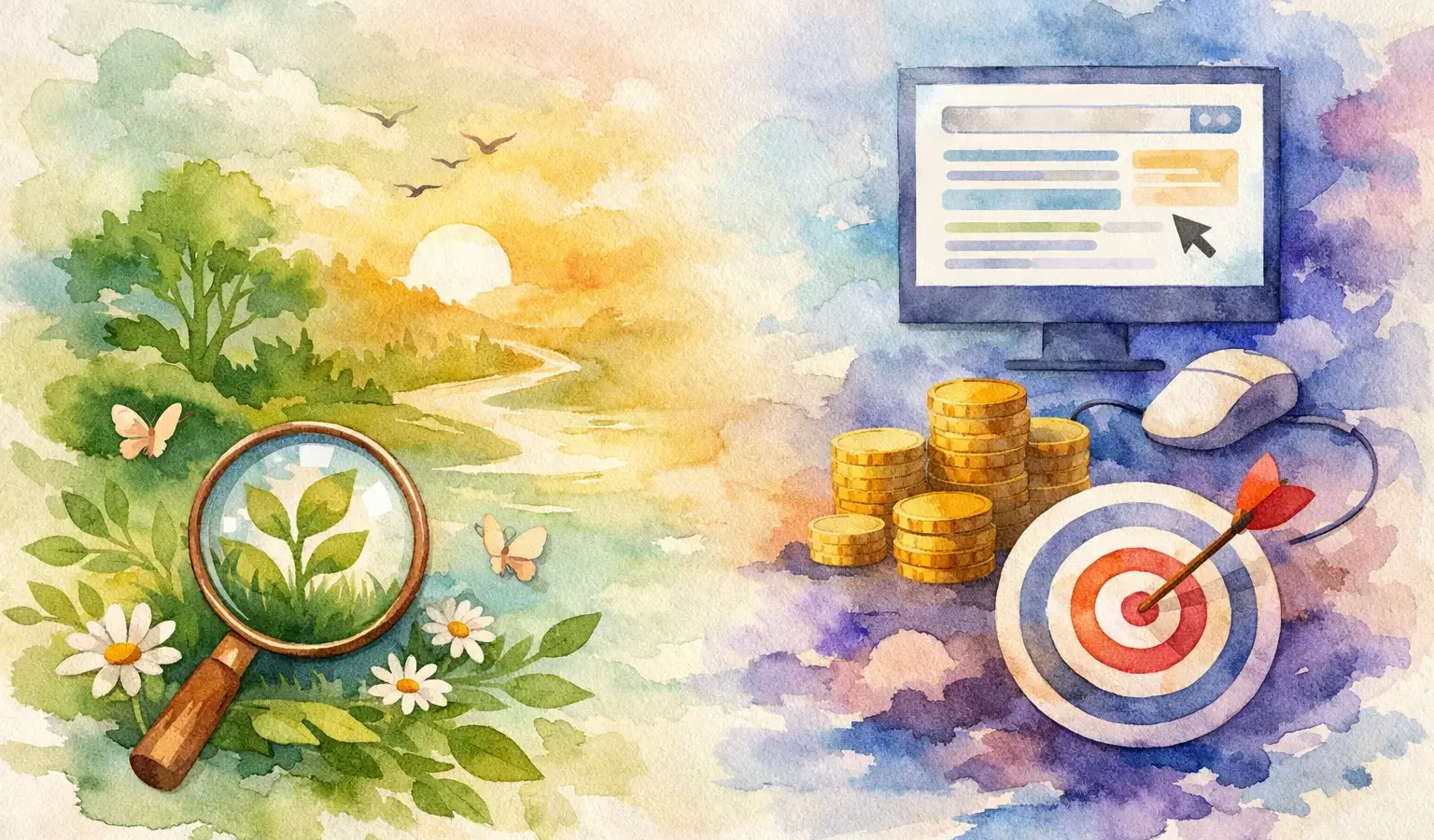
When a business says, “We need more traffic,” the real question is usually this: do you need visibility that compounds over time, or visibility that starts this week? That is where organic search vs paid search becomes a strategic decision, not just a marketing preference. One builds momentum. The other buys attention. Strong brands often need both, but not in equal measure and not for the same reasons.
For founders, small business owners, and growing brands, this choice affects budget, timelines, and how people experience your business online. It also shapes how your brand is perceived. A polished website, sharp messaging, and thoughtful design can bring someone in, but search strategy determines whether they find you at all.
What organic search vs paid search really means
Organic search refers to the unpaid results that appear in search engines based on relevance, quality, authority, and user experience. You earn that visibility through SEO – content, site structure, technical performance, keyword strategy, and credibility over time.
Paid search refers to sponsored placements, usually through platforms like Google Ads, where you bid on keywords so your business appears for targeted searches. You pay for clicks, impressions, or other actions depending on the campaign setup.
The difference is simple on the surface. Organic search is earned. Paid search is purchased. But the more useful distinction is this: organic search builds a long-term asset, while paid search gives you immediate control.
That trade-off matters.
Organic search vs paid search: speed vs staying power
If you just launched a new business, paid search can put you in front of potential customers quickly. That is especially valuable when you have no search visibility yet, no rankings, and no time to wait six months for traction. Paid campaigns are often the fastest route to testing offers, validating demand, and generating early leads.
Organic search works differently. It takes longer to build, but the payoff grows more durable over time. A well-optimized service page or article can attract qualified traffic month after month without charging you for every click. That makes SEO especially attractive for businesses that want efficient acquisition over the long run.
Still, speed is not always the same as effectiveness. Paid search can drive traffic fast, but if your landing page is weak or your offer is unclear, you can burn budget quickly. Organic traffic may arrive more slowly, yet those visitors often come through content that already aligns with their questions and intent.
This is where strategy matters more than channel loyalty.
When organic search makes more sense
Organic search is often the better investment when your brand needs trust, authority, and sustained visibility. If you offer services people research carefully, SEO gives you room to educate before asking for a sale. It helps your business show up not only for high-intent searches, but also for the earlier questions that shape buying decisions.
It is also a strong fit when your website is meant to do more than collect clicks. A brand with strong positioning, thoughtful design, and clear messaging benefits from organic traffic because each page becomes part of a larger credibility system. Searchers find your content, explore your site, and form an impression of your professionalism before they ever reach out.
For service-based businesses, organic search can be especially effective for local and niche visibility. If someone searches for a specific service with strong intent, and your site speaks clearly to that need, organic rankings can become one of your most valuable lead sources.
The downside is patience. SEO rewards consistency, not urgency. Results can be slow, competition can be fierce, and progress often depends on technical improvements, content quality, and ongoing refinement. There is no switch to flip.
When paid search makes more sense
Paid search makes sense when timing is critical. Maybe you are launching a new offer, entering a competitive market, promoting a seasonal service, or trying to generate leads while your SEO foundation is still developing. In these cases, paid campaigns offer speed, precision, and measurable control.
You can target specific keywords, locations, audiences, and conversion actions. You can test headlines, offers, and landing page messaging. You can scale what works and pause what does not. That flexibility is valuable, especially for businesses that need data quickly.
Paid search is also useful when organic results are crowded by large brands, directories, or aggressive competitors. Sometimes ranking organically for a high-value keyword will take substantial time and resources. Paid search lets you compete in that space sooner, provided your economics support it.
But paid traffic has a simple weakness: it stops when spending stops. That does not make it bad. It just means it behaves more like rented attention than owned visibility.
The real cost question is not just budget
Many businesses assume SEO is free because you are not paying per click. It is not free. It requires investment in strategy, content, technical performance, user experience, and often design clarity. The cost is simply structured differently.
Paid search looks more expensive because you see the spend directly. Every click has a price tag. Yet the visibility is immediate, and the feedback loop is faster. In some cases, that can actually make it more efficient than months of unfocused SEO work.
So the better question is not, “Which is cheaper?” It is, “Which channel fits our goals, margins, and timeline?”
If your average customer value is high and your offer converts well, paid search may be a smart growth lever. If your business benefits from educational content, recurring search demand, and long decision cycles, organic search may produce stronger returns over time.
Why brand quality affects both channels
Search strategy does not exist in isolation. A weak brand can underperform in both organic and paid environments.
If your website looks outdated, your message is vague, or your offer lacks differentiation, paid search will expose those issues quickly. You may get clicks, but not conversions. On the organic side, even strong rankings will not help much if users land on a page that feels generic or hard to trust.
This is why the strongest search performance often comes from brands that align design, story, and conversion strategy. Search gets people to the door. Brand experience helps them step in.
At Armand Graphix, that intersection is where many businesses see the biggest shift – not just more visibility, but better-qualified attention supported by a brand presence that feels intentional.
Should you choose one or use both?
For many businesses, the best answer is not organic search or paid search. It is sequence.
Paid search can create immediate traffic while organic search is being built. At the same time, SEO can reduce dependency on ad spend over time. Used together, each channel can strengthen the other. Paid campaigns reveal which keywords convert. SEO content expands your reach across related search intent. Organic landing pages can be repurposed for ads. Conversion data from ads can sharpen your broader site messaging.
That said, not every business should split attention too early. If your budget is tight, trying to do everything at once can dilute results. A better approach is to choose the primary channel that matches your current stage.
If you need leads now, start with paid search and build your SEO foundation in parallel. If you already have some traction and want a stronger long-term acquisition engine, invest more heavily in organic growth. If your brand is in transition, fix the website and messaging first. Search can amplify clarity, but it cannot replace it.
How to decide what is right for your business
Start with your timeline. If you need results in the next 30 to 60 days, paid search is usually the more realistic option. Then look at your budget. If you can support testing, optimization, and landing page improvements, paid can move quickly. If your resources are better suited to building durable visibility, organic may be the smarter long game.
Next, consider your market. Are people actively searching for what you offer? Is that search intent commercial, educational, or mixed? Are the results dominated by major players, or is there room for a specialized brand with a clear point of view?
Finally, look honestly at your website. Is it built to convert? Is the messaging sharp? Does the design support trust? Search performance improves when the destination is as strong as the traffic strategy.
The most effective marketing does not chase channels for their own sake. It chooses the right tool for the job, then supports it with thoughtful creative, clear positioning, and disciplined execution. If you are weighing organic search vs paid search, the answer is rarely ideological. It is strategic.
And that is good news, because strategy gives you options. Start where the pressure is highest, build where the value lasts, and make sure the brand people find is worth remembering.