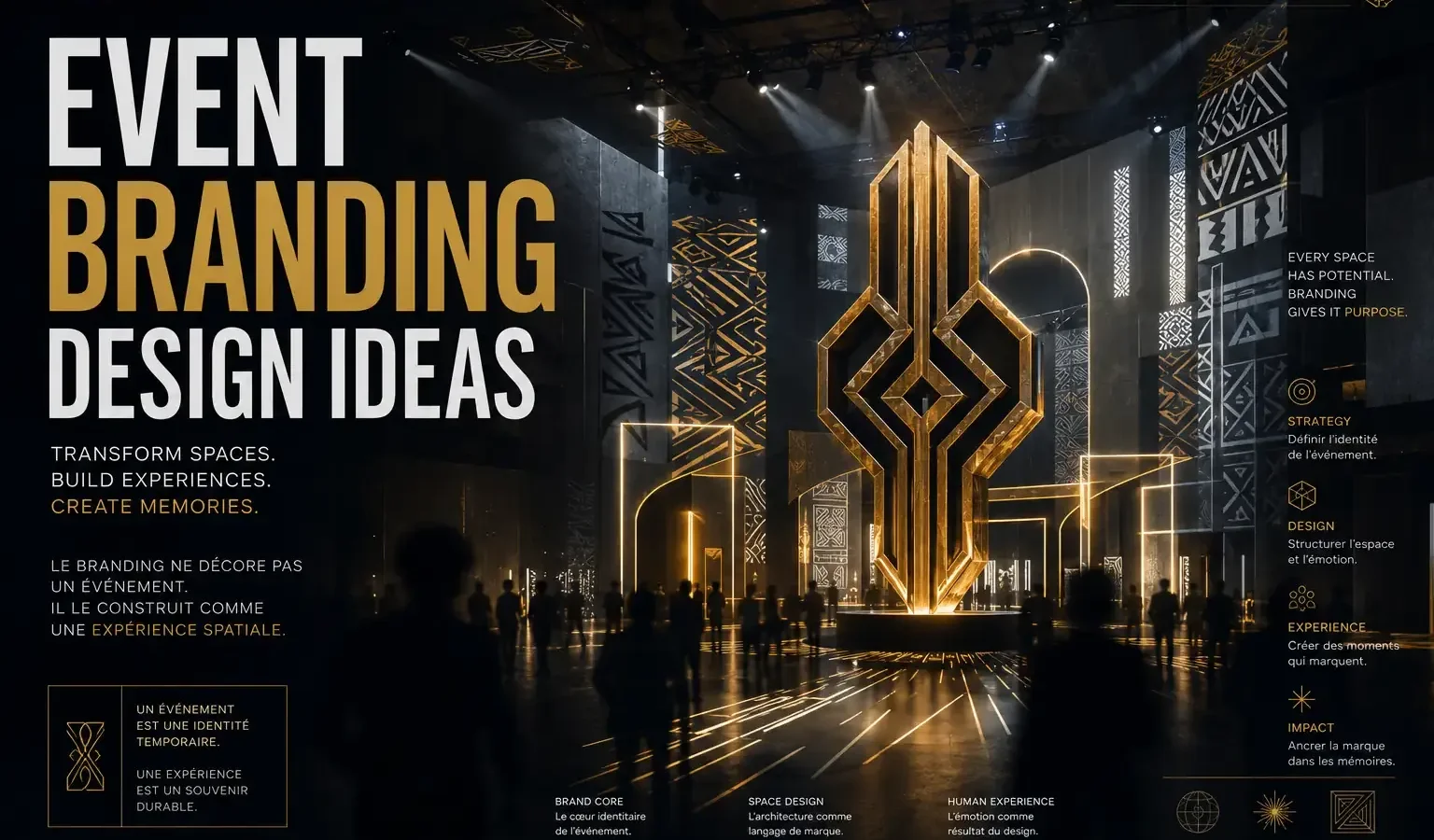
The strongest events are recognizable before guests even walk through the door. A registration page, a social teaser, a badge, a stage backdrop – each piece either builds anticipation or weakens it. The best event branding design ideas do more than decorate a venue. They create a visual system that tells a story, sets expectations, and makes the experience feel intentional from first impression to final photo.
For founders, marketing teams, and organizers, that distinction matters. A beautiful event can still feel generic if the design language is inconsistent. On the other hand, a clear brand story carried across every touchpoint can make even a modest event feel elevated, credible, and worth sharing.
What makes event branding effective
Event branding works when it creates continuity. Your audience should feel the same brand energy in the invitation, on the event website, in the signage, on social media, and inside the room itself. That does not mean repeating one logo everywhere. It means designing an experience with a consistent visual voice.
That voice usually comes from a few core decisions – typography, color, image style, motion language, copy tone, and spatial application. When those pieces align, the event becomes more memorable. It also becomes easier to market because every asset feels connected.
There is a trade-off here. Some brands lean so hard into consistency that the event feels static. Others chase novelty and lose recognition. The right balance depends on the purpose of the event. A corporate summit may need restraint and authority. A launch party or culture-forward conference may need more visual edge and expressive movement.
12 event branding design ideas worth using
1. Build a concept before you build assets
Start with a central idea, not a mood board full of unrelated references. A good event concept can come from the brand story, the campaign theme, the audience mindset, or the city hosting the experience. That concept becomes the filter for every design choice.
If the event is about innovation, the design should not stop at futuristic gradients. Think about how progress, momentum, or transformation can show up in layout, animation, signage, and language. Strong concept work gives the event depth. It keeps the visuals from feeling trendy for the sake of it.
2. Create a flexible visual system
An event has more moving parts than a standard campaign. You may need digital ads, email headers, tickets, stage screens, directional signs, menus, merchandise, speaker decks, and recap graphics. A rigid design system breaks under that pressure.
Instead, create a toolkit. Define a primary logo lockup, then add secondary marks, graphic motifs, color pairings, and layout rules that can adapt to different sizes and formats. This is one of the most practical event branding design ideas because it saves time while keeping quality high.
3. Design with the attendee journey in mind
Most event branding fails when it focuses only on the room. The real experience starts earlier. People meet your event through promotion, registration, reminders, and social content before they ever see the venue.
Map the attendee journey and design for each moment. The registration page should feel branded and friction-free. Confirmation emails should reinforce the visual identity. On-site materials should help people move with confidence. Post-event content should extend the same look so the memory of the event feels complete rather than cut off.
4. Let typography carry personality
Typography is one of the fastest ways to make an event feel distinctive. It can signal elegance, urgency, playfulness, exclusivity, or cultural relevance before a single image appears.
A bold display typeface can give a conference strong stage presence. A refined serif can make a gala feel premium. A layered pairing of expressive headlines and clean body text can balance creativity with readability. The caution is simple: dramatic type works only if it remains functional across screens, signage, and print. If guests cannot read wayfinding from a distance, style has gone too far.
5. Use color strategically, not decoratively
Color does emotional work. It guides attention, affects mood, and helps audiences recognize your event instantly in crowded feeds. But a broad palette often weakens impact.
Choose a primary color story with intention. Then define where each color appears. Maybe one hue owns the call-to-action buttons, another shapes directional signage, and a third appears in stage lighting or environmental graphics. Color consistency builds recall. It also helps your event photographs look more cohesive after the fact, which matters for future promotion.
6. Turn signage into part of the brand story
Too many events treat signage as a last-minute utility item. That is a missed opportunity. Signage can do more than point people toward registration or restrooms. It can reinforce the event narrative, support mood, and create moments people want to photograph.
Think beyond the standard welcome board. Consider branded wall statements, room naming systems, installation graphics, table markers, and directional cues that feel integrated into the experience. The key is clarity. If a sign looks great but causes confusion, it is not doing its job.
Event branding design ideas for digital and physical spaces
7. Design for screens inside the room
Modern events live on screens – LED walls, presentation templates, check-in tablets, agenda displays, livestream frames, and social reels captured on-site. If these assets are not part of the branding plan from the start, the event begins to split into mismatched pieces.
Screen-based design should account for scale, motion, and viewing distance. Fine details often disappear on large displays. Simple compositions, strong contrast, and controlled animation usually perform better. Motion graphics can add energy, but they should support the atmosphere rather than distract from the speakers or program.
8. Create branded moments people want to share
Shareability is not luck. It is designed. Photo moments, interactive installations, branded backdrops, packaging for giveaways, and unexpected environmental details all increase the odds that attendees will post about the event.
The smartest approach is to create scenes that are both on-brand and genuinely enjoyable. Forced social moments feel obvious. A well-designed space, however, gives people a reason to document the experience because it looks and feels worth remembering. That distinction is where event branding starts supporting organic reach.
9. Bring packaging thinking into event materials
Packaging design principles work beautifully in event branding. Think about how tactile details shape perception – the stock of an invitation, the finish on a badge, the box for a speaker gift, the wrapping on a welcome kit. These pieces can make the brand feel more premium without requiring a massive production budget.
Even simple materials benefit from thoughtful hierarchy and presentation. A name badge can feel forgettable or refined depending on spacing, print quality, and the way it connects to the broader identity. Small physical details often carry outsized emotional value.
10. Reflect culture with care and clarity
For brands speaking to diverse audiences, event design should not rely on surface-level references. Cultural cues can add richness and relevance, but they need context and respect. Pattern, color, language, symbolism, and imagery all carry meaning.
Intercultural design thinking asks a better question: what visual language will resonate with this audience while staying true to the brand? Sometimes that means highlighting local influence. Sometimes it means keeping the identity more universal. The answer depends on who the event is for and what story it needs to tell.
11. Plan for sponsors without breaking the brand
Sponsored events often struggle with visual clutter. Multiple logos, competing colors, and late additions can quickly dilute the identity you worked hard to build.
Solve this early with a sponsor integration system. Define logo zones, spacing rules, screen templates, and signage formats that give partners visibility without letting the event lose itself. Good branding protects the experience while still delivering value to sponsors. It is not about hiding them. It is about organizing the relationship with intention.
12. Design for what happens after the event
A strong event identity should not end when the lights go down. It should leave behind content that can be repurposed into case studies, social posts, highlight videos, email campaigns, and future event promotion.
This means thinking ahead. Use templates for quote graphics and recap slides. Plan how photography will capture branded environments. Consider how stage visuals will appear on camera. Brands that design for post-event storytelling get more return from the same investment because the event keeps working long after the schedule ends.
How to choose the right event branding design ideas
Not every idea belongs in every event. A founder-led product launch may benefit from high-drama visuals and bold experiential moments. A nonprofit fundraiser may need emotional warmth and donor trust more than visual spectacle. A business conference may require a cleaner system that scales across presentations and partner materials.
The right direction comes from strategy. Start with the audience, the business goal, and the kind of emotional response you want to create. Then shape the design system around those priorities. That is the difference between decoration and brand performance.
At Armand Graphix, the most effective event identities come from treating design as both story and structure. The visuals need to move people, but they also need to work across channels, teams, and real-world constraints. That is where polished creative becomes a business asset.
If you are planning an event, aim for more than a good-looking room. Build a branded experience people can feel, recognize, and remember long after they leave.
“See how powerful event branding turns empty spaces into emotional brand worlds.”
Explore more design strategies and visual breakdowns in the full article.
Start a Branding Project →- WordPress Versus Custom Websites for Growing Brands
 WordPress versus custom websites: compare cost, speed, control, SEO, and growth to choose a site that supports your brand and business goals clearly.
 - What Does Brand Strategy Include for Growth?
 What does brand strategy include? Learn the research, positioning, identity, messaging, and marketing choices that turn a business into a distinct brand.
 - Packaging Design Guide for Retail Brands
 A packaging design guide for retail brands: build shelf impact, meet production realities, and turn a first glance into a confident purchase decision.
 - Multicultural Branding Trends 2026 for Modern Brands
 Multicultural branding trends 2026 will reward brands that pair cultural intelligence, inclusive design, and local relevance with measurable, real growth.
 - Custom Logo vs Template: What Fits Your Brand?
 Custom logo vs template: compare cost, speed, ownership, and brand impact to choose an identity that builds your launch, growth, and reputation today.
 - What Is a Visual Identity? Design That Builds Trust
 What is a visual identity? Learn how logos, color, typography, and systems create recognition, trust, and stronger brand growth for ambitious businesses.