A founder approves a logo, chooses brand colors, updates the website, and assumes the identity work is done. A few months later, the sales deck feels off, social content sounds inconsistent, packaging looks disconnected, and the team describes the company three different ways. This is where the question of corporate identity vs brand identity stops being academic and starts affecting trust, clarity, and growth.
These two terms are often used as if they mean the same thing. They overlap, but they are not identical. If you are building a startup, refreshing a small business, or scaling a product-based brand, knowing the difference helps you make better creative decisions and avoid expensive misalignment later.
Corporate identity vs brand identity: what is the difference?
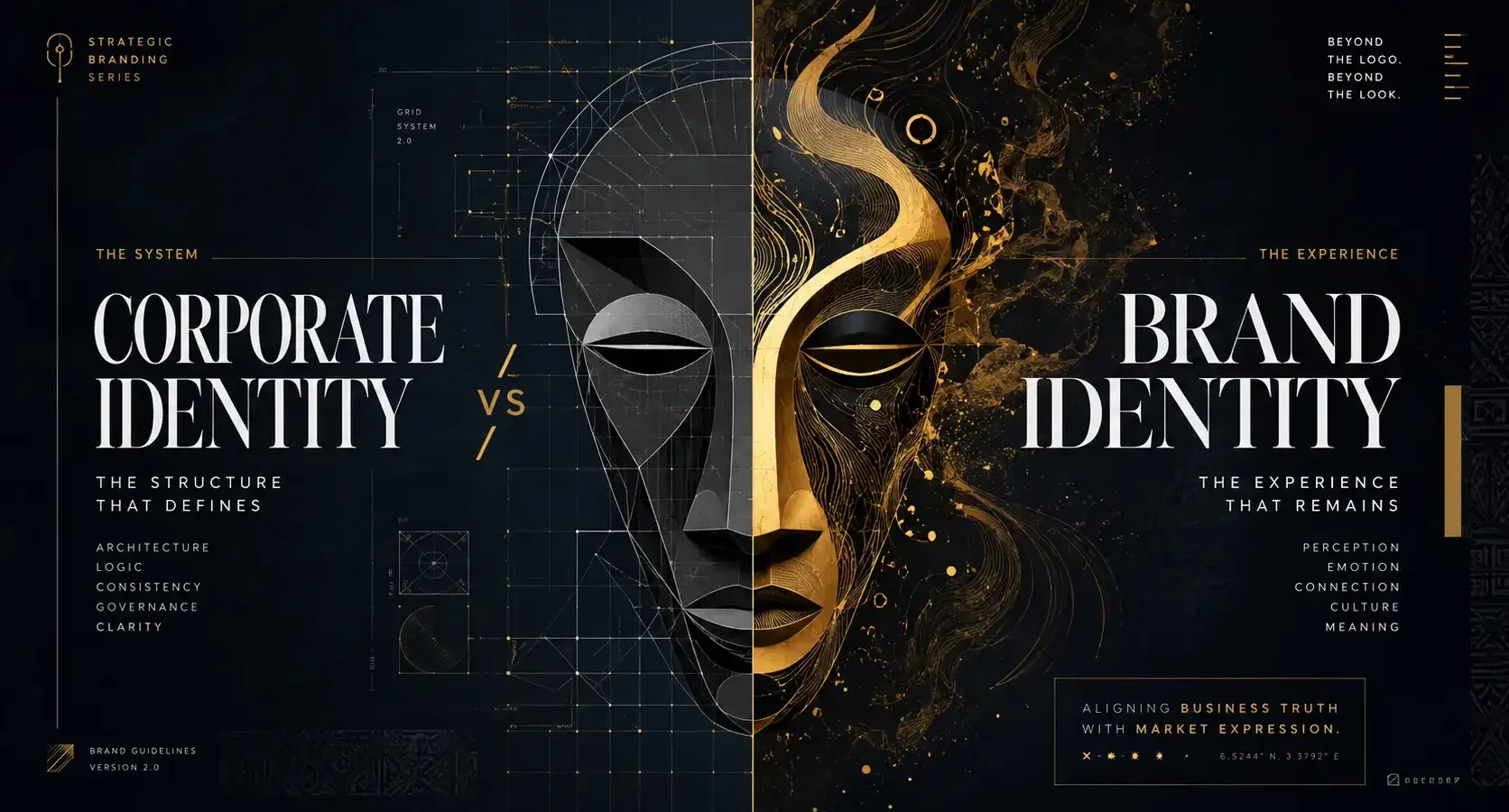
The cleanest way to separate them is this. Corporate identity is how the company presents itself as an organization. Brand identity is how the brand is expressed so people can recognize it, feel it, and remember it.
Corporate identity tends to be more structural. It includes the company name, organizational values, internal culture, business positioning, official messaging, and the systems that shape how the business shows up across formal touchpoints. Think company profile, investor presentation, email signatures, internal documents, recruitment materials, and the overall professional face of the business.
Brand identity is more sensory and emotional. It includes the visual language, tone of voice, typography, color palette, logo system, imagery direction, packaging style, and messaging cues that build recognition in the market. It is what makes a brand feel distinct rather than generic.
The easiest way to think about it is this: corporate identity defines the business behind the brand, while brand identity shapes the experience people have with it.
For some companies, especially small businesses, the line is thin because the founder, the company, and the brand are closely tied together. For larger organizations, the distinction becomes more obvious. A parent company may have one corporate identity and manage several customer-facing brands with different personalities.
Why the confusion happens
Part of the confusion comes from how branding projects are sold. Many businesses ask for a “brand identity” when they actually need broader alignment around positioning, company values, audience, and message hierarchy. Others ask for a corporate identity package when what they really need is a more compelling and memorable brand presence.
Another reason is that both identities share visible assets. A logo can serve both corporate and brand functions. So can typography, language, and color. The difference is not just in the asset itself. It is in the role that asset plays.
If a visual system exists mainly to present the organization with consistency and professionalism, that leans corporate. If it exists to create differentiation, emotional connection, and recall in the market, that leans brand. In practice, strong businesses need both.
What corporate identity usually includes
Corporate identity is often more strategic than people expect. It is not only about stationery or formal templates. At its best, it expresses who the company is, how it operates, and what it stands for.
That can include mission, vision, value statements, communication principles, company story, naming architecture, internal brand language, and the standards used across official communication. It also shapes how the company appears to partners, investors, employees, media, and institutional audiences.
For example, a consulting firm may need a highly credible corporate identity that signals rigor, trust, and maturity. The visual system might be restrained. The messaging might be precise. The goal is less about charm and more about confidence.
That does not mean corporate identity has to feel cold. It simply means its job is often tied to legitimacy, consistency, and organizational clarity.
What brand identity usually includes
Brand identity is where design starts telling a fuller story. This is the layer people see in your website, social presence, packaging, campaigns, signage, presentations, and customer experience.
It includes the logo, yes, but also the way type behaves, the rhythm of layouts, the emotional temperature of colors, the photography style, the verbal personality, and the small details that make a brand recognizable across every touchpoint. Good brand identity creates cohesion. Great brand identity creates memory.
A coffee brand, fashion label, tech startup, or wellness company often relies heavily on brand identity because customer choice is influenced by perception, taste, emotion, and differentiation. The visual and verbal expression is not decoration. It affects whether people trust the offer, understand the value, and feel drawn to it.
This is where design that tells your story becomes more than a slogan. Identity gives strategy a visible form.
Corporate identity vs brand identity in real business terms
If you are a founder, the practical question is not which term sounds better. It is what problem you are trying to solve.
If your business looks inconsistent across proposals, internal documents, hiring materials, and formal communication, you may have a corporate identity issue. The organization itself is not presenting clearly.
If your business looks polished but forgettable, or if customers do not emotionally connect with your offer, you may have a brand identity issue. The market-facing expression lacks distinction.
If your team struggles to explain what the company stands for and your audience also finds the brand unclear, you likely need both addressed together.
That is often the smartest route. Strategy that grows your brand depends on alignment between the inside of the business and the outside expression of it.
When the distinction matters most
For early-stage startups, separating corporate identity from brand identity can feel unnecessary at first. Speed matters, budgets are tight, and the founder is doing a bit of everything. Still, this is exactly when confusion can creep in. A startup might build a trendy visual brand that performs well on social media but lacks the professional structure needed for partnerships, recruitment, or investor conversations.
On the other hand, some businesses overbuild the corporate side. They create formal presentations, polished documents, and carefully worded mission statements, yet the brand has no emotional edge. Everything is competent, but nothing is memorable.
Retail, hospitality, and consumer brands usually need stronger brand identity early because perception drives sales. Professional services, B2B firms, nonprofits, and institutions often need stronger corporate identity foundations because trust and clarity drive decision-making. Still, even that depends on audience and ambition.
A design-led startup pitching investors and selling direct-to-consumer products may need a refined corporate identity and a compelling brand identity from day one. Context matters.
Can one exist without the other?
Technically, yes. Strategically, that is risky.
A company can have a corporate identity without a distinct brand identity. It will appear organized but may struggle to stand out. A business can also have a strong brand identity without a clear corporate identity. It may attract attention but create confusion behind the scenes.
This gap shows up in surprising places. A beautiful brand may win customers, but inconsistent internal messaging can weaken sales conversations. A polished corporate image may impress stakeholders, but generic customer-facing design can limit growth.
The stronger move is integration. Your company should know who it is, and your audience should feel that clearly through every touchpoint.
How to decide what your business needs now
Start with the symptoms, not the terminology. Ask where the friction is happening.
If your issue is inconsistency across business materials, unclear company language, fragmented internal communication, or an unprofessional organizational presence, focus first on corporate identity.
If your issue is weak recognition, bland visuals, unclear differentiation, or a lack of emotional connection with customers, focus first on brand identity.
If you are rebranding, launching, entering new markets, or trying to unify design with marketing performance, treat them as connected. That is often where the best results happen. A visual system performs better when it is anchored in a clear business narrative, and marketing gets stronger when identity decisions are not made in isolation.
This is also where a portfolio-driven creative partner can add real value. At Armand Graphix, the strongest identity work is never just about making things look better. It is about shaping a brand that feels intentional and a business that communicates with clarity.
The real goal is alignment
Corporate identity vs brand identity is not a debate about which one matters more. It is a question of alignment between business truth and market expression.
When those two layers work together, people experience your brand as coherent. Your team speaks with more confidence. Your visuals carry meaning. Your message lands faster. Your marketing performs better because it is built on something solid.
And when they do not work together, the disconnect shows. Sometimes subtly, sometimes expensively.
If your brand is growing, changing, or preparing for a bigger stage, this is the right time to look beyond logos and ask a deeper question: does the way your business presents itself truly match the story you want people to believe?